ATELIER No. 020 / PATTERN REGISTERONE SEARCH PHRASE / THREE DIFFERENT PATTERNS
020
A strapless seamless push up bra is a pattern family, not one SKU.
What a wholesale buyer is ordering is repeatability across a size curve, a colourway list and a construction choice, consolidated into one shipment. The words strapless, seamless and push up describe garment styling, not a material, a certification or a performance outcome.
A boutique buying brief template is the cleanest way to separate those decisions;
the wholesale sourcing overview shows how a mixed order is assembled.
PATTERN A
Seamless knit bandeau
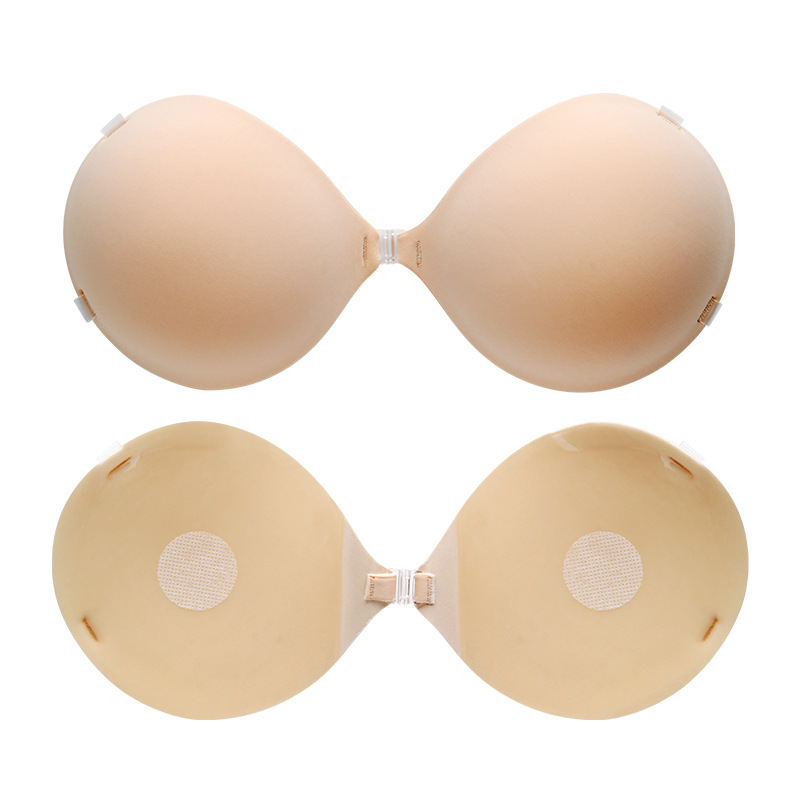
A one-piece circular-knit body with an elastic or silicone gripper edge, optional removable pads and a hook-and-eye closure. A textile labelling file.
PATTERN B
Self-adhesive cups
Moulded cups held by a pressure-sensitive skin-contact layer, with a front clasp. A materials and skin-contact documentation line of its own.
PATTERN C
Structured strapless
Moulded cups, underwire or support strips, side boning and a back band. Structural components add their own inspection points.
WHOLESALE / REPEAT STOCKONE SIZE-CURVE FILE / ONE LABEL FILE / ONE CONSOLIDATED SHIPMENT
ADULT APPARELNO MEDICAL ENDORSEMENTNO BODY-OUTCOME CLAIMNO APPROVAL BADGE
01
ATELIER 01 / CLASSIFICATION
Decide which pattern you are buying before you write the listing
THREE ROUTES
Retail listings use strapless, seamless and push up as one phrase, but the three constructions above sit in different supply chains. A knit bandeau is a textile article whose main evidence is a fibre and care label file. A self-adhesive cup adds a skin-contact layer whose liner, release behaviour and residue belong in the specification. A structured strapless adds support components with their own failure modes. Putting all three under one supplier declaration is the fastest way to receive a document that fits none of them. Our uniform fabric, sizing and laundry spec shows the same discipline applied to another garment category, and a custom product specification sheet is the format we ask buyers to use.
FIELD
A / KNIT
B / ADHESIVE
C / STRUCTURED
BODY
Circular-knit or bonded panels
Moulded cups plus adhesive layer
Moulded cups, wire or support strips, side panels
HOLD
Gripper edge and band tension
Skin-contact adhesive surface
Band, closure and structural support
LABEL FILE
Fibre content, origin, care
Material declaration and skin-contact records
Fibre content, origin, care plus component records
QC FOCUS
Elastic recovery, edge finish
Adhesive residue, release, edge lift
Symmetry, closure strength, component security
PACK RISK
Fold marks at the edge
Cup deformation and liner protection
Cup crushing under compression
The distinction also decides what happens when a buyer changes the brief mid-programme. Switching a knit body from one elastic supplier to another changes the composition declaration and the care basis. Adding a gel or adhesive layer changes the material record. Changing a cup mould changes the symmetry and packing checks. Sample approval gates and change control on approved samples are where those revisions are recorded; a component sourcing brief keeps the trim list attached to the right construction.
02
ATELIER 02 / SPECIFICATION
Write the specification before you ask for a price
BOM 01-12
A comparable quote needs a written brief, not a photograph. The rows below are the fields we ask a buyer to confirm before any supplier is approached. They are specification fields, not claims about the finished garment, and the values come from the buyer and the approved sample. A boutique buying brief and a restock PO checklist are useful starting templates; consolidating production supply explains why several factories still produce one order file.
BOM / WHAT TO WRITE INTO THE BRIEF
B01
Construction route
Pattern A, B or C declared per SKU, not blended under one generic description.
B02
Body fabric
Generic fibre names and percentages by weight, with the elastic component named consistently for the destination market.
B03
Gripper / edge
Silicone gripper strip, bonded edge or knit selvedge; placement and width recorded on the approved sample.
B04
Cup and pad
Moulded cup, foam pad, gel support or removable insert; symmetry, thickness and recovery written into the brief.
B05
Adhesive layer
For pattern B only: liner, release behaviour and residue after the buyer confirmed wear and cleaning cycles.
B06
Structure and trim
Wire or wire-free support, side boning, hook-and-eye or front clasp, strap anchors where applicable.
B07
Colourways
A named colourway list with a Pantone or physical swatch reference held on file for each lot.
B08
Size grading
The confirmed size curve, band and cup convention, and the grading rules between adjacent sizes.
B09
Labels and marks
Fibre content, origin, responsible identity, care symbols, size mark, retail barcode and carton mark.
B10
Retail pack
Bag, box, hanger or header card, plus inserts and any printed claim text for artwork approval.
B11
Golden sample
A signed reference unit per construction, colourway and size band, held against the production lot.
B12
Document file
Composition declaration, test reports, label artwork and traceability records requested by style and lot.
One naming detail deserves its own line. A North American trade term for the elastic fibre is not a permitted generic fibre name in the European Union, where the approved term is elastane. A single label artwork that uses the EU accepted wording is the safer starting point, but the final wording, language and placement are for the importer and its advisers to confirm. Label and packaging stock sourcing, custom packaging and a private label packaging brief keep the artwork, the label stock and the carton mark on the same revision. For branding decisions, private and white label manufacturing and OEM, ODM and OBM compared explain who owns the pattern, the tooling and the artwork.
The fee position is stated once, plainly. Our quoted price already includes our margin. There is no separate sourcing fee or commission added on top, and we do not set a strict MOQ of our own. The quote is built from the confirmed construction, size curve, colourways, pack format, document scope and load cube, and an itemised landed cost guide sets out which cost lines belong in that comparison. A freight quote checklist and custom manufacturing in China are useful when the brief moves from a stock item to a made to order programme.
03
ATELIER 03 / DOCUMENTATION
The label file is the gate, not a certificate
LABEL STACK
For adult apparel, the practical gate is labelling. In the United States the textile rules call for generic fibre names and percentages by weight, country of origin, and the responsible company name or a registered identification number; the care rule calls for permanent, legible instructions with a reasonable basis. A flammability determination under 16 CFR Part 1610 includes exemptions, and where an applicable rule requires it the US importer issues a general certificate of conformity. None of that is a product approval badge. A US product compliance document map and an import compliance selection filter show the same evidence-first approach in other categories.
LABEL STACK / FOUR SURFACES THAT MUST AGREE
L01 ON THE GARMENT
Fibre content, country of origin, responsible company or registered identity, and a durable size mark.
L02 CARE PANEL
Permanent care instructions with the symbol order and any warnings supported by the finished garment.
L03 RETAIL PACK
Colourway, size, barcode, brand artwork and the exact claim text that appears on the listing.
L04 CARTON MARK
Style, size and colour counts, lot reference and the shipper marks used for the consolidated load.
M01
UNITED STATES
Fibre content, origin and responsible identity under the FTC textile rules; permanent care instructions under the FTC care rule; a flammability determination under 16 CFR Part 1610 with its exemptions, and an importer-issued GCC under 16 CFR Part 1110 where an applicable rule requires one; lead in coatings under 16 CFR 1303; California Proposition 65 where relevant.
M02
UNITED STATES / ORIGIN
For US bound apparel, supply chain traceability records reaching the fibre and yarn tiers are requested before production, by style and lot. The importer of record answers any authority enquiry about origin.
M03
EUROPEAN UNION
Fibre composition using the permitted generic names under Regulation (EU) 1007/2011 in the languages of the member state, durable and accessible labelling under Article 14; REACH Annex XVII restrictions on azo dyes, formaldehyde, phthalates and cyclic siloxanes; GPSR Regulation (EU) 2023/988 risk analysis, documentation, traceability and an established Union economic operator under Article 16.
M04
UNITED KINGDOM
Retained textile labelling rules, chemical restrictions and a UK responsible person as determined by the importer and its advisers. Care symbols following ISO 3758 are a voluntary convention unless a national or retailer rule requires them.
M05
VOLUNTARY / ALL MARKETS
An independent textile testing certificate may be requested by the buyer for a named article; it is a scoped, dated document, not a substitute for statutory labelling or a general approval. Verify the holder, article, scope and validity before any reference is printed.
Two boundaries matter here. First, an independent textile testing certificate is a voluntary, scoped document; it does not replace statutory labelling or a regulator determination, and its holder, article, scope and expiry should be checked before any reference is printed. Second, ordinary adult apparel is not a category where a CE mark is the route, so a CE mark is not added as decoration. Certificate verification practice and certifications by industry describe how we check a document against the named article rather than against a supplier profile; who is the importer of record explains where the signature sits.
US bound apparel carries a second, separate file: supply chain traceability. Records should reach fibre, yarn, fabric and garment tiers and be filed by style and lot before production, not assembled after a port enquiry. UFLPA supply chain documentation and shipping documents by mode cover the paperwork sides; US customs entry and UK customs and VAT sit with the destination importer. We assemble and cross-check supplier records; we do not classify the goods.
We are a sourcing, QC and freight coordination partner, not a lingerie manufacturer, not the brand owner, not a test laboratory, not a certification body, not a carrier, not a customs authority and not a licensed customs broker. We request and check documents against the agreed brief; we do not classify the goods, we do not certify compliance, we do not decide which statements may appear on a listing, we do not clear intellectual property or image rights, we do not promise a customs release and we do not promise a transit time. Whether an article falls inside a textile labelling, flammability, chemical, general product safety or supply chain traceability framework, and how a size conversion or a claim is worded, is decided by the importer of record and the buyer qualified advisers.
04
ATELIER 04 / CLAIM BOUNDARY
What we will not print on the listing or the box
NO CLAIMS
Competitor pages in this category lean on material grades presented as medical endorsements, universal skin promises, body outcome language, approval badges and fixed performance figures. A buyer who repeats those phrases on a retail pack inherits the substantiation burden for them. We keep our page, our quote and our artwork comments to verifiable fields: construction, composition, size, colourway, care and intended garment use. A branded versus generic range discussion and boutique store sourcing set out the same plain-language positioning for a retail programme.
CLAIMS REGISTER / WORDING WE LEAVE OUT
C1
Material grade language
A material grade presented as a medical endorsement, or a biocompatibility test document rewritten as a broad marketing guarantee, is not used on the page, the pack or the listing.
C2
Skin and body outcome statements
No diagnosis, treatment, healing, disease prevention, allergy prevention, skin repair, body correction or figure outcome language, and no promise of a universal fit or an absolute hold.
C3
Approval and certification badges
No agency approval badge, no blanket certification statement and no generic safety seal. A CE mark is not the route for ordinary adult apparel, so it is not added as decoration.
C4
Numbers we do not invent
No price, no order threshold, no lead time, no duty rate, no certificate number, no fixed wear count, no fixed adhesion or retention figure and no fixed service term presented as a guarantee.
C5
Images and rights
Model imagery, third party logos and brand references are the buyer responsibility. We do not clear image or trademark rights and we do not supply legal opinions.
A biocompatibility test document, where one exists for a named material, describes a tested sample under a stated method. It is not a general approval, not a universal skin statement and not a reason to add an endorsement to a listing. Supplier qualification and factory verification explain what a supplier file can and cannot show. Model photography, third party brand references and logo artwork are the buyer responsibility; drawings and artwork ownership is the same principle in another category. We do not clear image or trademark rights and we give no legal opinion.
05
ATELIER 05 / SIZE GRADING
The size curve is the order
SIZE x COLOUR
In this category the order is a matrix, not a single line. Band and cup conventions differ between the United States, the United Kingdom and continental Europe, and a letter size range does not map cleanly onto a band and cup grade. A buyer should state the destination convention, the grading rule between adjacent sizes, the proportion of each size in the curve and whether an extended size range is part of the same programme. Wholesale reorder planning and a twelve month restock calendar show how a curve turns into repeat orders; consolidating wholesale orders covers the mixed SKU count.
SIZE CURVE / COLOURWAY PARITY GRID
COLOURWAY 1 / NUDE
S1C1
S1C2
S1C3
S2C1
S2C2
S2C3
S3C1
S3C2
S3C3
S4C1
S4C2
S4C3
S5C1
S5C2
S5C3
COLOURWAY 2 / BLACK
S1C1
S1C2
S1C3
S2C1
S2C2
S2C3
S3C1
S3C2
S3C3
S4C1
S4C2
S4C3
S5C1
S5C2
S5C3
COLOURWAY 3 / BLUSH
S1C1
S1C2
S1C3
S2C1
S2C2
S2C3
S3C1
S3C2
S3C3
S4C1
S4C2
S4C3
S5C1
S5C2
S5C3
COLOURWAY 4 / IVORY
S1C1
S1C2
S1C3
S2C1
S2C2
S2C3
S3C1
S3C2
S3C3
S4C1
S4C2
S4C3
S5C1
S5C2
S5C3
A counting aid only. Each cell is a potential SKU, not a quantity, and the buyer confirmed curve decides which cells are actually ordered.
The same size mark has to appear, unchanged, on the garment, the retail pack, the inner carton and the invoice. A mismatch is one of the most common reasons a mixed apparel shipment is re-counted at the warehouse. A case pack carton specification and FBA prep and carton labelling describe the counting discipline; first article inspection is where the marks are checked against the golden sample. A colourway change without a new swatch approval is a new specification, not a note on the packing list.
06
ATELIER 06 / LOAD PLANNING
One consolidation, counted per SKU
ONE SHIPMENT
Mixed constructions, sizes, colourways and pack formats close as one shipment from China, but the counting is done per SKU. Each cell of the matrix keeps its own unit count, inner carton count and mark; the master carton list then ties them to one buyer reference and one invoice. Multi factory container consolidation and a mixed shipment worked example show the same pattern outside apparel; the freight forwarder role and DDP shipping describe who books and who signs. Chargeable weight matters here because apparel cartons are light relative to their cube.
ONE CONSOLIDATED SHIPMENT / LAYER STRIP
01
MATERIAL
Knit body, gripper, cup, adhesive liner, trim and label stock.
02
MAKE
Cut, bonded or sewn, assembled and finished per construction route.
03
RETAIL PACK
Each unit packed with its own size mark, colourway and artwork.
04
INNER CARTON
Counts checked per size and colourway, not per style alone.
05
ONE LOAD
All cartons of the order consolidated into one shipment from China.
Two packing facts change the quote. Moulded cups and structured side panels do not tolerate the same compression as a flat knit bandeau, so the pack format and carton fill are confirmed on the golden sample rather than assumed from a weight estimate. The article has no motor, no mains plug, no cell and no magnet, so it does not create a lithium battery declaration line; if the same order carries accessories that do, those are declared separately. Lithium battery shipping documents and US entry documentation are the relevant reading; US importer category rules and our sourcing categories place the programme in the wider range.
07
ATELIER 07 / INSPECTION
First article: eight release gates
G1-G8
A wholesale programme lives or dies on repeatability between lots, not on one good sample. The gates below are the checks we write into an inspection plan for the confirmed construction. Acceptance windows come from the buyer and the approved sample; we do not invent pass figures. Pre shipment inspection and the specification sheet are the two documents that carry them; document verification shows the same trace-to-the-lot habit.
G1
Elastic recovery
Stretch and return after the buyer confirmed cycles.
G2
Edge finish
Gripper adhesion, bonded seam and selvedge flatness.
G3
Adhesive behaviour
Release, residue and liner integrity on pattern B.
G4
Closure strength
Hook-and-eye or clasp pull and repeat fastening.
G5
Cup symmetry
Left and right cup shape, thickness and position.
G6
Component security
Wire tips, boning ends and pad pocket finish.
G7
Lot colour
Colourway consistency against the signed swatch.
G8
Label durability
Legibility of size, fibre and care marks after cleaning.
Gate eight is easy to under-estimate: a fibre, size or care mark that fades or peels after the buyer confirmed cleaning cycle turns a good garment into a labelling problem. Label stock sourcing, pack artwork control and approval gates keep the printed surfaces inside the same change control as the garment. Supplier qualification is checked before the first lot, not after a complaint.
08
ATELIER 08 / FAQ AND SCOPE
Pattern-room notes: the questions we get
NOTES 01-06
Can one PO carry several constructions, sizes and colours?
Yes. That is the normal wholesale pattern. Each construction keeps its own golden sample, its own document line and its own size and colourway counts, and the whole order still closes as one shipment.
Who decides the size conversion for each market?
The buyer. Band and cup conventions are not interchangeable across markets, and a letter size range does not map cleanly onto a band and cup grade. We record the agreed convention on the brief and check the physical marks against it.
Do you provide an EU responsible person or a textile certificate?
We request documents and check them against the brief. We do not appoint an economic operator, issue certificates or decide which regulation applies. Those roles sit with the importer and its qualified advisers.
Is a test report the same as permission to sell?
No. A scoped laboratory report describes a tested sample under a stated method. It is one item in a document file, not a clearance, not a certification of the whole range and not a marketing badge.
What about UFLPA records for US bound apparel?
Traceability reaching the fibre and yarn tiers is requested before production and filed by style and lot. The importer of record responds to any authority enquiry; we assemble and cross-check the supplier documents, we do not give legal opinions.
Do you promise a customs release or a transit time?
No. We coordinate sourcing, QC and freight documentation. Entry questions, duty treatment and release belong with the importer of record and its broker.
The scope is deliberately narrow. We do not write treatment, body outcome or universal skin claims; we do not print approval badges; we do not invent performance figures, prices, minimum quantities or lead times; and we do not present a borrowed test method as a legal requirement. About our role and the wholesale sourcing overview describe the same boundary in plain terms. A regional category map is a useful example of how the destination changes the file; destination side documents and the contact form are the practical ends of that process.
RFQ
SIGN-OFF / WHAT TO SEND
Send the construction route, size curve, colourway list, retail pack, target market and the documents you need requested. We answer with a comparable quote and a written gap list.
The contact form and the WhatsApp button rendered by this product theme both reach the same team.




Reviews
There are no reviews yet.