PRODUCT LINE
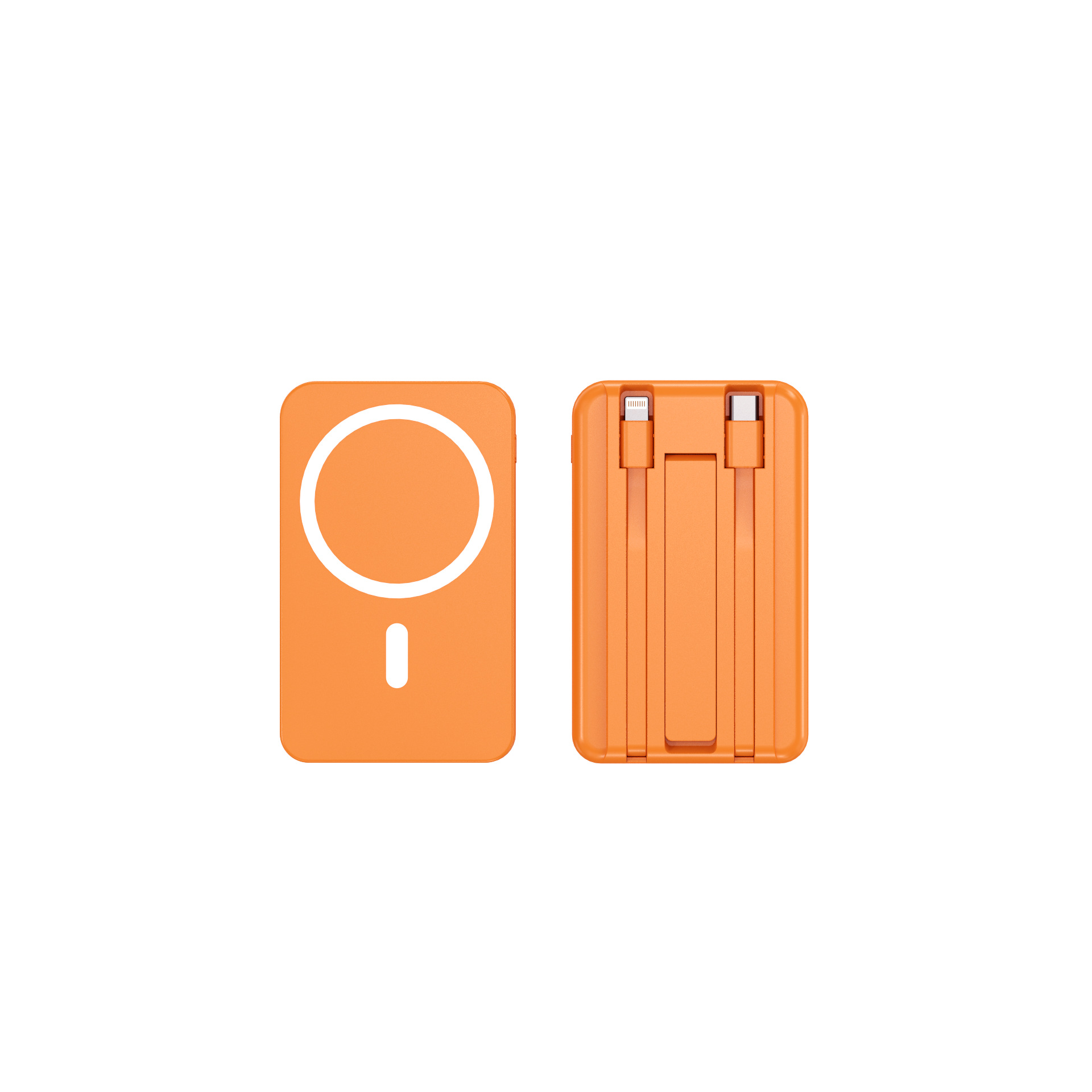
Magnetic wireless power banks and magnetic charging accessories
BUY MODE
Wholesale and repeat-stock supply, private label and project quantities
SHIP MODE
Multi-SKU consolidation with battery goods declared separately
DOCUMENT
Written brief, model-matched certificates, one all-in quote
CHARGE LEVEL / ILLUSTRATIVE
Schematic only. Not a capacity or performance claim.
Magnetic wireless power banks are a fast-moving consumer accessory line, and they are also a regulated battery product. This page is for wholesalers, private-label brands and retail buyers who want a repeat-stock supply of several models in one purchase order, consolidated into one shipment with the battery paperwork checked before loading. It is not a technical approval of any specific model. Our wholesale sourcing service covers how a mixed order is built; our reorder planning guide covers how repeat volumes are scheduled.
01
INPUT SPECIFICATION
What to write into the buying brief
Two suppliers can quote the same “5000mAh magnetic power bank” and deliver very different goods. The brief is what makes quotes comparable. Put the following on the purchase order before any deposit, and keep a signed golden sample against it. A buying brief template is a useful starting shape, and sample approval gates explain why the approved sample should be locked before mass production.
Electrical, magnetic and mechanical parameters
CELL VS RATED
State both the cell capacity and the rated capacity at the stated output voltage. A 5000 mAh cell is not a 5000 mAh delivered output; conversion losses are real.
WATT-HOURS
Ask for the Wh rating on the label and on the test summary. Wh determines which transport section applies, so it belongs in the brief, not in a footnote.
WIRELESS STANDARD
Name the standard and the requested output profile, and require a verifiable certificate and database listing. Wattage claims must follow the standard owner rules.
MAGNET ARRAY
Magnet grade, ring dimensions, tolerance and retention force, with the force verified after ageing and thermal cycling rather than only on a fresh unit.
THERMAL & FOD
Foreign-object detection, temperature limits, derating behaviour and pass-through charging support, all stated for the exact model.
WIRED I/O
USB-C input and output profiles, any bundled cable, and whether the adapter is included or shipped separately.
HOUSING & FINISH
Case material, thickness, colour, surface finish and logo method; confirm the finish against the approved sample.
RETAIL PACK
Box artwork, insert, barcode, multilingual manual and outer carton quantity.
Custom packaging should be signed off with the product, not after it.
QC GATES
Golden sample, pre-shipment inspection scope and the agreed acceptance standard.
Our inspection service sets out what can be checked before the balance payment.
CHANGE CONTROL
Any change of cell, coil, magnet, firmware or housing after sample approval needs written notice.
Change control explains why silent substitutions cause the most disputes.
MARKET LIST
Name every destination market up front. The document set is market-specific.
CERTIFICATE OWNER
Ask who holds each certificate and whether the model number on the report matches the model you are buying.
WHY THIS MATTERS FOR A MIXED ORDER
A brief written once for the whole order lets every factory quote to the same specification, and it lets us check the received cartons against one document instead of twelve different interpretations.
The component sourcing brief uses the same logic for industrial buyers.
02
COMMERCIAL MODEL
Wholesale and repeat stock, not one-off parcels
We build this as a wholesale line: one purchase order, several SKUs, repeat replenishment. A typical range mixes capacity bands, colours, bundled cables, stand or ring accessories and retail packaging variants. Treating them as one order is what makes consolidation worthwhile, and consolidating wholesale orders is the mechanism we use.
How a repeat-stock order is structured
01
SCOPE
One brief for the full range
Capacity bands, finishes, packaging and target markets are fixed in writing. Equivalent or private-label versions are listed as separate lines, never silently swapped.
02
SAMPLE
Golden sample per model
Each model gets an approved sample and a written acceptance standard.
First-article inspection is where dimensional and functional checks are recorded.
03
PRODUCTION
Factory minimums stated in writing
We do not set a strict MOQ of our own. If a factory applies a minimum to a custom colour, print or tooling, we tell you before you commit, not after.
04
RECEIPT
Cartons into one consolidation warehouse
Every supplier delivers against the same PO reference, so the receiving team can match quantity, model and carton marks.
05
REPEAT
Reorder against the same brief
The next PO reuses the approved sample and the same document set.
A restock calendar helps keep the range in stock without rebuilding the spec.
[ OK ]Mixed capacity bands, colours and packaging variants on one purchase order.
[ OK ]One written line-by-line quote covering goods, inspection, consolidation, export documents and freight. The quote checklist shows what a comparable quote should contain.
[ OK ]Repeat POs reuse the approved sample, the same certificate set and the same packing instructions, so the second shipment matches the first.
03
FREIGHT COORDINATION
One consolidated shipment, with battery goods separated
This is where most mixed consumer-electronics orders go wrong. A consolidated shipment is one commercial movement with one invoice, one packing list, one inspection and one receiving event for the buyer. It is not a reason to hide lithium batteries inside a general-cargo declaration. Battery lines are identified on their own lines and travel under the rules the carrier accepts. Multi-factory consolidation and production supply consolidation describe the non-battery version of the same process.
The consolidation sequence
01
01 DELIVER
One delivery instruction to every factory
PO number, carton marks, label position and delivery window are identical across suppliers.
02
02 RECEIVE
Check in against the PO
Quantity, model, capacity band, carton mark and retail pack are checked on arrival. Discrepancies are raised at the warehouse, not at the terminal.
03
03 INSPECT
One pre-shipment inspection
Appearance, function, label text, barcode and carton condition are checked against the golden sample and the written brief.
04
04 DECLARE
Battery lines kept visible
Lithium-battery SKUs are listed with their Wh rating and model on the invoice and packing list. Non-battery accessories such as packaging, display stands and cables are listed separately.
Packaging and labelling supplies are a common second line in these orders.
05
05 LOAD
Measure, document, ship
Actual chargeable weight and volume are measured after consolidation.
Chargeable weight explains why the measured figure can differ from the factory estimate. One invoice and packing list then cover the movement, subject to the dangerous-goods rules in section 04.
An invoice that says “electronic accessories” while the dangerous-goods documents identify standalone lithium batteries is a common reason for a refused booking. Keep the description consistent across the commercial invoice, packing list, battery documents and carrier declaration.
Mode selection follows the cargo, not the other way round. Our freight forwarder service sets out how express, air, rail and sea are compared for a given consignment, and documents by mode covers the paperwork that goes with each. Where the buyer wants duties handled at origin, DDP shipping sets out who carries which responsibility, and the importer of record guide explains why that role cannot be invented.
04
DANGEROUS GOODS
Lithium batteries: the part of the order that gets held
A magnetic power bank is a lithium-ion battery product. In transport it is Class 9 dangerous goods, and the classification follows the battery configuration, not the retail product name. This is the section most consumer-accessory pages leave out, and it is the one that decides whether a consolidated booking is accepted at all. Our lithium battery shipping documents guide covers the file set; this section explains why it interacts with consolidation.
UN 3480
PI 965 / STANDALONE
Power banks shipped on their own are generally treated as standalone lithium-ion batteries. Air transport normally means cargo aircraft only, stricter state-of-charge limits and carrier acceptance in advance.
UN 3481
PI 966 / 967
Packed with equipment or contained in equipment. The configuration is decided by how the carton is built, and a mixed carton does not inherit the loosest rule from its smallest item.
100 Wh
SECTION THRESHOLD
The watt-hour rating on the label must match the test summary. The 100 Wh threshold and the 20 Wh cell threshold separate the sections; above them, full dangerous-goods treatment applies.
What has to be checked before a booking
[ OK ]UN 38.3 test summary for the exact cell and pack design, with the model and Wh rating matching the label. A report for a different model is not a substitute.
[ OK ]SDS / MSDS in the required format, plus the transport condition reports the lane asks for. Certificate verification explains the six fields we check on any report.
[ OK ]State of charge. The 2026 IATA rules extend the 30% state-of-charge cap beyond standalone cells to batteries packed with equipment in the affected sections. Confirm the current edition with the carrier before production, because a cell that leaves the factory at a healthy storage charge can still fail an air booking.
[ OK ]Packaging and marks. Terminal insulation, short-circuit protection, approved packaging where required, the Class 9 lithium battery mark and the correct UN number. Carrying an old or wrong mark is a misdeclaration.
[ OK ]Declaration and acceptance. Shipper declaration, airline or consolidator acceptance on the specific lane, and sea rules under IMDG when the movement goes by ocean. Some carriers simply refuse standalone lithium on certain routes.
We do not classify the goods, we do not certify compliance, we do not promise a customs release and we do not promise a transit time. Whether a battery SKU can travel with general cargo, under which UN number and in which packing section, is decided by the applicable air or sea rules, the carrier and the destination authority. We put that confirmation in writing before the load is closed.
US entry and
UK VAT and EORI cover two common destinations.
Sea freight has its own dangerous-goods rules and is often more practical for larger battery volumes; it still needs the declaration, marks and package checks. Consolidating other battery-bearing goods shows how the load plan is built before a container is closed, and why a shared consolidation adds restrictions that a full container does not. Freight cost should be quoted against the measured, declared cargo, not against an assumed general-cargo rate; an itemised landed cost shows the line items to ask for.
05
DOCUMENT MATRIX
Certificates and market access, by destination
Two different document families are involved here: transport eligibility for the battery, and market access for the finished product. Neither is transferred automatically from a factory brochure. We request the reports and check that the model, holder and scope match the goods being quoted; the importer of record and a qualified destination-market adviser decide what is actually required. The US document map and electronics certifications by industry give the wider frame.
01FCC PART 15
US radio and EMC requirements for wireless power devices; check the label text and the equipment authorisation for the exact model.
02UL 2056
Power bank safety standard often requested for North American retail acceptance. Ask for the report from the named testing body.
03IEC 62133-2
Cell and pack safety. Often paired with IEC 62368-1 for the finished product and a CB scheme report.
04UN 38.3
Transport test summary for the cell and battery design; the model on the summary must match the label.
05CE / RED
EU declaration of conformity covering RED, EMC and LVD as applicable. Wireless power transfer has its own ETSI standard and EMF assessment needs.
06EU 2023/1542
EU batteries regulation: labelling, producer responsibility and a phased QR code requirement. Check the current timetable for the exact product.
07RoHS / REACH
Substance restrictions and SVHC screening for the finished assembly, cables and packaging.
08GPSR / UKCA
EU general product safety obligations and the UK conformity route; both put duties on the economic operator placing the goods on the market.
09WPC QI2
A Qi or Qi2 certificate and database listing from the Wireless Power Consortium, with logo use following its guidelines.
HOW WE HANDLE CERTIFICATES
We request the documents, check the model number, holder and scope against the agreed brief, and tell you what is missing.
We do not certify compliance and we do not promise a customs release. Where a market requires a local responsible person, registration or labelling, that is handled by the importer of record.
Supply chain documentation and
the compliance selection filter cover the traceability side.
06
IP & CLAIMS
Brand names, standards and claims: the boundary
Magnetic alignment is a standard, not a brand licence
MagSafe is an Apple trademark and its use is governed by Apple accessory programmes. Qi and Qi2 are standards and certification marks owned by the Wireless Power Consortium. We do not use either as our own brand, we do not claim to be an authorised distributor of any brand, and we do not present a product as certified when we have not seen a verifiable listing. For non-enrolled products, standards-based compatibility wording is the safe route; a physical magnet arrangement is not a certification.
SCHEMATIC – NOT A CERTIFICATION MARK
That boundary changes how the brief is written. Where a buyer names a branded product, we check the authorised channel and the source documents and say plainly if they cannot be verified. Where the buyer gives a specification instead, we source a model that meets the written specification or a private-label version, and we describe it by its standards and measured parameters rather than by someone else’s trademark. Branded versus generic ranges sets out the commercial trade-off, and our genuine / OEM / equivalent guide uses the same verification logic. Custom manufacturing is the route when the specification is yours.
[ OK ]Keep wattage and proprietary brand words out of the SKU title; put verified claims in the description and on the artwork only where the standard owner allows it.
[ OK ]Do not promise charging speed, device compatibility, wear behaviour or cycle life on the factory’s behalf. These come from the model test reports and the approved sample.
[ OK ]Buyer-supplied artwork, logos, characters and packaging copy remain the buyer’s clearance responsibility.
[ OK ]A certificate is not a licence. A Qi2 listing does not grant use of another company’s trademark, and a UN 38.3 summary is not a product safety certificate.
We are not the brand owner, not an authorised distributor of any third-party brand, and not a power bank manufacturer. Where a named brand is requested, the authorised channel and source documents must be verifiable; if they are not, we say so and offer a specification-matched or private-label route.
07
COMMERCIAL TERMS
What we need to quote, and how we charge
Send these six inputs and we will return one written quote with a line-by-line breakdown. We do not publish price lists for this category, because the cost depends on the cell, the certificate set, the artwork and the declared shipping mode.
[ OK ]Capacity bands and the number of models, with the mix of colours and packaging variants.
[ OK ]Required wireless standard and certificate evidence, plus wired I/O and bundled accessories.
[ OK ]Destination markets, so the document set can be scoped correctly.
[ OK ]Destination port or door address and the preferred shipping mode.
[ OK ]Private-label artwork, barcode and labelling requirements, including whether labels are applied at the factory or at the consolidation warehouse.
[ OK ]Inspection scope and the acceptance standard tied to the golden sample.
Our quoted price already includes our margin. There is no separate sourcing fee or commission added on top, and we do not set a strict MOQ of our own.
We are a sourcing, QC and freight coordination partner, not a power bank manufacturer, a battery cell maker, a test laboratory, a certification body, a carrier, a customs authority or a licensed customs broker. We request and check documents against the agreed brief; we do not classify the goods, we do not certify compliance, we do not promise a customs release and we do not promise a transit time.
This page is a sourcing and freight description, not engineering, legal or dangerous-goods advice. Final classification, market access and admissibility are determined by the importer of record, the carrier and the destination authority.
About our sourcing and QC operation and
our sourcing categories describe the wider scope of what we handle.
08
FAQ
Questions buyers ask before the first order
Q
Can several capacity bands and colours go on one purchase order?
Yes. That is the normal wholesale structure for this line. Each model still needs its own approved sample and its own model-matched documents, and battery lines stay visible on the invoice and packing list.
Q
Can the power banks share one container with cables, packaging and display stands?
Commercially, one consolidated movement is the goal. Physically and legally, the battery SKUs are declared under the applicable dangerous-goods rules and the non-battery lines are listed separately. Whether they can travel together is decided by the carrier, the mode and the destination rules, confirmed in writing before loading.
Q
Do you guarantee a 15W wireless output or a specific phone model will fast charge?
No. Output depends on the certified standard, alignment, temperature, the phone and the case. We put the requested profile into the brief and check the certificate and sample; we do not make the performance claim ourselves.
Q
Is a UN 38.3 report enough to ship?
No. It is one required element. State of charge, packaging, marks, declarations and carrier acceptance all matter, and the applicable rules change by edition and lane.
Q
Do you certify the products or guarantee customs clearance?
No. We request and check documents against the brief and report gaps. Classification, conformity and admissibility are determined by the importer of record, qualified advisers and the destination authority.
Q
Do you handle branded products?
Where a buyer names a brand, we check the authorised channel and source documents and state plainly if they cannot be verified. Where a specification is given instead, we source a specification-matched or private-label version. We are not the brand owner.
Q
Is there a minimum order?
We do not set one of our own. Where a factory applies a minimum to a specific custom finish, print or tooling, we state it in writing before you commit. The charging arrangement is set out in section 07.
NEXT STEP / RFQ
Send the specification. We will come back with one written quote.
Tell us the capacity band, the wireless standard you require, the markets you sell into, the mix of SKUs and the destination. We will put the goods, inspection, battery documents, consolidation and freight into a single written line-by-line quote.
Use the contact form or send the list on WhatsApp and we will go through it line by line.
Andrew | CINO SOURCING | www.cinosourcing.com


Reviews
There are no reviews yet.