
LABEL FILE / 018 – TASTING ROOM
POSITION / FOUR LINES
COURSE 01 / STRUCTURE
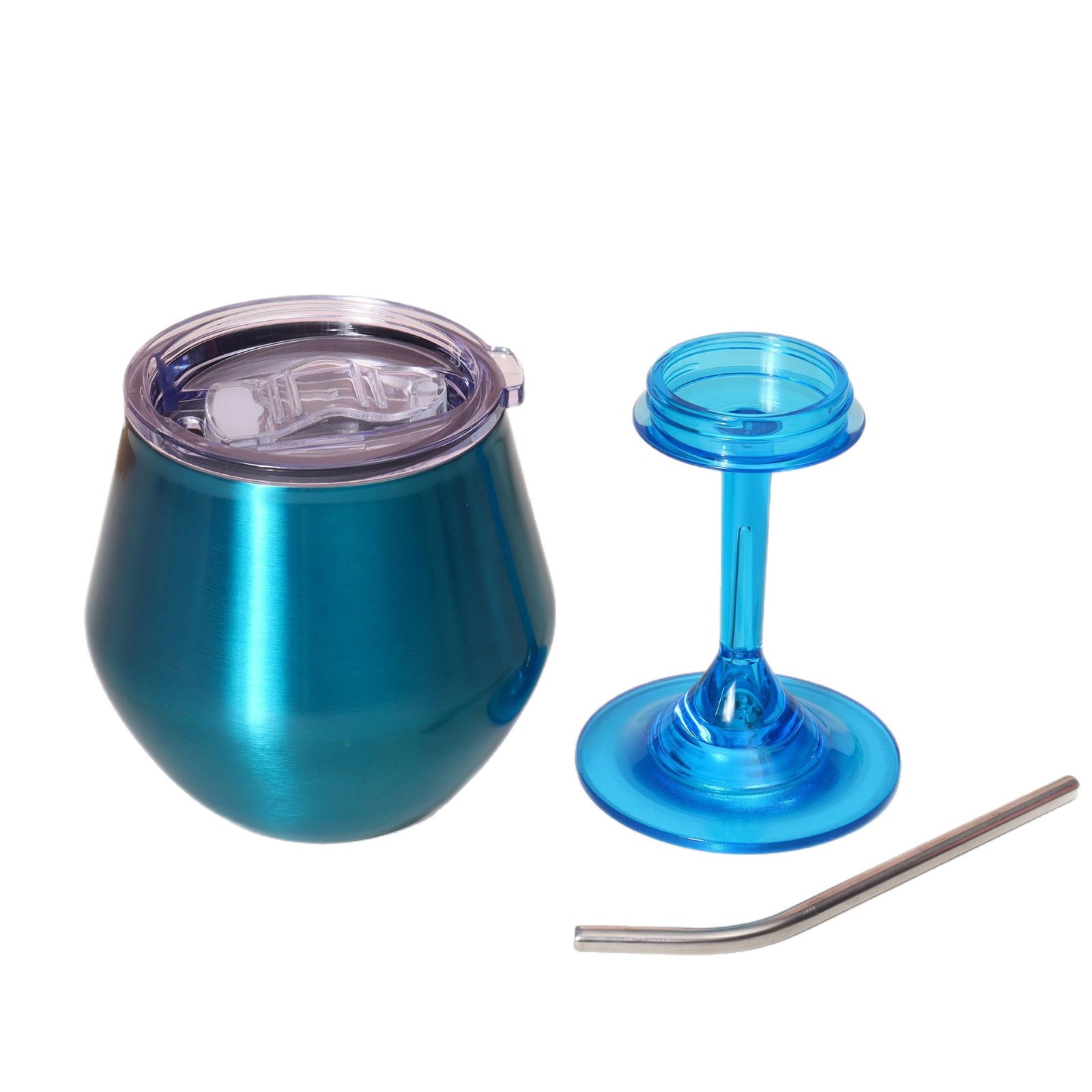
In the search results for this category, detachable does not describe a lid that comes off. It describes a split assembly: a double-wall vacuum-insulated bowl, a stem or rod that screws or locks into the bowl, and a base disc that the stem seats into. Some versions add a flat-base conversion so the same bowl can be sold as a stemmed goblet or a stemless tumbler; some add a removable silicone pad under the base to reduce slip and noise. A smaller number add a detachable handle. The trade terms you will see are convertible, modular, 2-in-1, removable stem and detachable base. They are not interchangeable, and the first thing we ask a buyer to do is name which mechanism the brief actually covers.
The distinction matters because the vacuum layer lives in the bowl only. The stem, the base and the pad are mechanical parts with no insulating function. A detachable joint therefore has to hold the bowl without wobble, rattle or thread damage, and it must not be drilled, welded or reworked after the bowl has been sealed. That single sentence is the reason this product needs a different inspection plan from a one-piece tumbler. Our standard insulated stainless tumbler with straw is a single-body vacuum cup: same material family, no mating tolerance, no part pairing, no spare-stem ratio.
For a wholesale programme, three mechanisms dominate. A threaded joint uses a moulded or machined thread in the bowl base and a matching stem; it is easy to describe on a drawing but sensitive to cross-threading and to coating build-up in the thread. A bayonet or twist-lock joint uses a short rotation and a stop; it feels more premium but needs a defined stop position and a repeatable release force. A flat-base conversion uses a separate pad or collar and changes the retail story from glassware to outdoor drinkware. Whichever is chosen, the interface drawing, the tolerance band and the assembly cycle count belong in the confirmed specification, not in a marketing description.
Two ownership questions should be settled before tooling. If the buyer commissions a new bowl profile or a new joint, who owns the mould and the drawings? If the factory already holds the tooling for the stem and base, can it sell the same assembly to another brand? Our note on OEM, ODM and OBM sets out the difference, and custom manufacturing from China explains how a new part moves from drawing to approved sample. A component sourcing brief is the practical place to record the grade, the finish and the interface for every part.
COURSE 02 / BILL OF MATERIALS
Ask the factory for a written part register. A photograph on a supplier page will not tell you the steel grade of the inner wall, whether the outer wall is a different grade, what resin the lid uses, what elastomer the seal uses, or which ink system sits on the outside of the bowl. Each of those lines can carry its own document requirement, and a report issued for a plain brushed bowl does not automatically cover a powder-coated bowl from the same production line.
The reason we are pedantic about the register is practical: a competent laboratory report names the article, the material, the colour or coating, the test method and the date. A generic factory statement with a different product description, or a report for an uncoated sample when the order is powder coated, is not evidence for the SKU being shipped. Our approach to verifying certificates was written for components, but the same discipline applies here: match the document to the exact part, finish and batch, and say plainly when a gap remains.
Keep the register in one file alongside the approved sample. When a second colourway, a new lid resin or a different ink supplier is introduced, that is a change, not a cosmetic note. Sample approval and change control describes how we record those changes so a later reorder does not silently drift away from the sample the buyer signed off.
COURSE 03 / FINISH LIBRARY
This is a gifting product as much as a drinkware product. Corporate programmes, weddings, tasting rooms and retail private-label ranges all want the same bowl with different decoration. The trade-off is that every decoration route adds an acceptance test, and several add a new material to the document list. A plain brushed bowl, an engraved bowl and a full-colour wrapped bowl should be quoted and specified as three SKUs, not one SKU with a note.
Artwork is where an otherwise straightforward order can stop. Supply vector files or high-resolution artwork, convert text to outlines, use the colour mode the decorator asks for, allow bleed beyond the cut line, and keep the design simple enough to register on a curved, tapered bowl. Approve a physical or photographic proof before production, and keep that proof as the visual reference for reorders. Custom packaging from China covers the same discipline for colour boxes, gift boxes, insert cards, barcodes and carton marks. Private label manufacturing explains how the brand elements are attached to a factory-held product.
Rights sit with the buyer. If a programme uses a corporate mark, a sports or band mark, a named character, a winery label or a third-party logo, the buyer supplies the artwork and the authority to reproduce it. We do not clear intellectual property rights, we do not check trademark registers and we do not give legal opinions. We also do not print an unauthorised mark on the assumption that a small internal giveaway is harmless; promotional and event use is still a use of the mark. Ownership of the artwork, the tooling and any registered symbol should be recorded in the contract, not implied on the product page. Branded versus generic range planning is a useful parallel when a buyer is deciding how much branding to put into a first wholesale range.
COURSE 04 / DOCUMENT FLIGHT
There is no single global food-grade certificate. Each jurisdiction asks a version of the same question: how much of which substance may migrate from the article into a food simulant, under which time and temperature conditions. For a detachable wine tumbler, the question is asked of the inner bowl, any internal coating, the lid resin, the seal elastomer and sometimes the outer decoration. Treating the whole assembly as one “food-grade” claim is the most common mistake in supplier listings.
Everything above is a request list. We ask the factory for the documents, check them against the agreed brief and report the gaps. We do not classify the goods, we do not certify compliance and we do not write a blanket approval statement. In particular we do not print an agency approval badge, a blanket certification claim, an absolute material claim, an absolute leak claim or a fixed temperature-retention figure on the page, the carton or the insert card. Retention performance is measured against the test method and acceptance window the buyer approves, and it is reported as a measured result for that article, not as a marketing promise. The US import document map and certification-by-industry notes show the same principle in other categories: the applicable line depends on the article and the destination.
One more practical point. A report that names a generic trading name, a different capacity or a different finish is weak evidence at inspection. Ask for the report to identify the article as shipped, and re-request it when the material, the coating, the ink, the lid resin or the production site changes. A compliance selection filter is a reasonable way to decide which documents to request per SKU before the order is placed, and the importer of record note sets out where the final responsibility sits. Supply-chain documentation, including UFLPA supply-chain evidence, may also be requested depending on the buyer programme.
COURSE 05 / INSPECTION
A one-piece tumbler fails mainly on the vacuum seal, the lid or the finish. A detachable tumbler adds a whole second family of failures at the joint. The inspection plan should therefore be written around the assembly, not only around the cup. The items below are the ones we put in front of a buyer before a first article is approved; the acceptance limits and the sample size are the buyer decisions, recorded in the specification sheet.
Use three gates rather than one. A first-article review fixes the part register, the interface drawing, the finish sample and the artwork proof; first article inspection describes what that visit covers. A golden sample is then sealed and referenced in the purchase order, following sample approval gates. Pre-shipment inspection checks the production lot against that sample, including the matched-part counts, under pre-shipment inspection. If a change occurs between those gates, it goes back through change control instead of being absorbed silently.
Spare parts deserve their own line. A buyer may want extra stems, extra base pads or extra lids as service parts, or may want none at all. That ratio is a commercial decision, but it has to be written down, because a carton containing more bowls than stems is an incomplete retail set. The same applies to mixed decoration: an engraved bowl with a plain stem may be intentional, but it should appear as a defined SKU rather than as a packing accident. A buying brief template is a compact way to state the set composition, and consolidating production supply explains how several factories feeding one assembly are brought under one inspection plan.
COURSE 06 / CONSOLIDATION
This product is almost always bought as a range, not as a single line: two bowl profiles, three finishes, a stemmed and a flat-base option, a plain lid and a sip lid, and two or three retail pack formats. The commercial value of consolidating wholesale orders is that all of those lines can sit on one purchase order, be inspected against one agreed sample set and leave China as one consolidated shipment. Multi-factory container consolidation is the version used when the bowls, the stems and the printed packaging come from different suppliers.
The split structure changes the cube calculation. If the sets ship assembled, each carton holds a tall, awkward shape and the retail gift box may dictate the carton dimensions. If they ship disassembled, bowls can sometimes nest and stems can be packed flat, but nesting coated bowls against each other creates rub marks, and the threaded interface needs protection. Neither choice is free. Measure the packed carton dimensions, gross weight and units per carton after the pack format is approved, then compare the actual and volumetric chargeable weight for the chosen mode. Chargeable weight from China sets out the arithmetic, and the freight quote checklist lists what has to be known before a quote means anything.
Paperwork has to describe the same goods as the cartons. The commercial invoice, the packing list, the material declaration, the test reports, the country of origin statement, the carton marks, the barcodes and the retail pack copy should use consistent SKU names and consistent part counts. Shipping documents by mode is the checklist we work from; the landed-cost guide explains where duties and fees enter the calculation, and the freight forwarder note separates our coordination role from the carrier role. Market-specific entry references include US entry, UK VAT and EORI and DDP shipping. We do not promise a customs release or a transit time.
There is no electrical line on this product: no mains motor, no heating element, no cell and no magnet. That is worth stating explicitly because a mixed drinkware order can easily pick up a temperature-display lid, a light-up base or an unrelated rechargeable accessory. If any such item enters the same shipment, it is declared on its own line with its own battery documents; the lithium battery shipping document note covers that separate path. Unrelated kitchen appliances in a mixed order, such as a portable USB blender, belong to a different compliance conversation entirely. The commercial kitchen equipment guide shows how different that conversation becomes once electrical equipment is involved. Warehouse packaging and labelling supplies covers the cartons, insert cards and labels that close the load.
COURSE 07 / CHANNELS
The search terms around this product are transactional rather than curious: detachable wine tumbler wholesale, removable stem wine glass bulk, stemmed wine tumbler supplier, custom logo wine tumbler, insulated wine goblet private label, corporate gifting drinkware, wedding tumbler bulk, promotional wine tumbler China, powder coated wine tumbler OEM, laser engraved wine tumbler bulk, and mixed SKU drinkware consolidation. Buyers are not asking what vacuum insulation is; they are asking whether a range of parts and finishes can be supplied together, branded, documented and repeated. We lay the page out around those long-tail forms and we do not publish invented monthly volumes, difficulty scores, prices or minimums.
A repeat-stock programme is where the part register pays for itself. Once the bowl, the joint, the finish and the artwork proof are frozen, a reorder is a controlled repeat rather than a fresh negotiation. Wholesale reorder planning and a twelve-month restock calendar are the two planning tools we point buyers to, and the sourcing categories page shows where drinkware sits alongside the other ranges we handle. For a buyer still deciding between a branded first run and a generic range, the branded-versus-generic note is the shortest decision aid.
COURSE 08 / SOMMELIER NOTES
If you want a written answer for a specific range, send the part list, the destination markets, the decoration routes and the pack formats. We will return a specification sheet, the document list we would request for those exact SKUs, and a consolidation plan. Wholesale sourcing from China is the service overview, the sourcing categories page shows the neighbouring ranges, and the contact form is the shortest route to a written reply.
018
CLOSING THE LOAD / WRITTEN BRIEF FIRST


Reviews
There are no reviews yet.