
Why This Product Sells
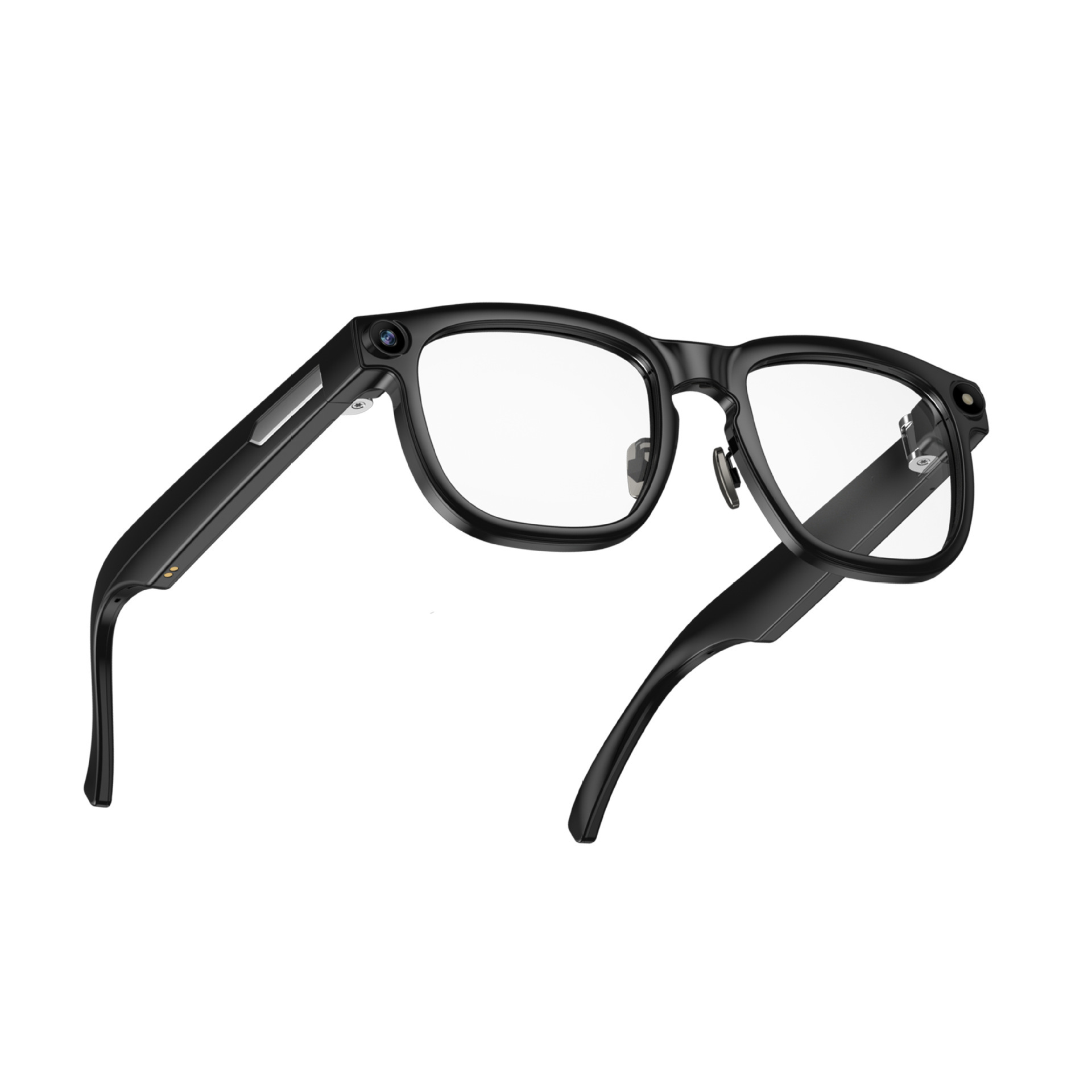
AI smart glasses are not a pair of sunglasses with a chip hidden in the temple. One frame is four regulated products at the same time: a radio device with an intentional transmitter, a product with a built-in rechargeable lithium cell, a camera and microphone that capture other people, and a piece of eyewear whose lenses sit in front of someone’s eyes. Each of those four carries its own documents, its own failure mode and its own person responsible. Buyers who treat this as a simple accessory usually discover the cost of that assumption at the sample stage, or worse, at the border.
Almost all of the enormous search volume in this category belongs to a handful of consumer brands; the generic phrases are far smaller than the news suggests. That is not a reason to ignore it. The brands have already paid to explain the use case: a traveller pointing the frames at a menu, a creator recording a first-person clip, a field engineer keeping both hands free. Customers understand the object without a demonstration. What they lack is a supply route not tied to somebody else’s retail brand and app store account.
That window widened this season. Platform companies are moving assistant eyewear into an ordinary accessory category, and the gifting press now lists smart glasses alongside mainstream presents. The unbranded supply side has matured too: Shenzhen and Dongguan workshops offer stable public-tooling platforms covering audio-only, camera and translation versions, with logo, packaging, device naming and software configuration as separate line items. The question for a distributor is no longer “can this be made” but “which version, whose software, which paperwork”.
Our site already publishes a page for a different AI product, a pocket voice recorder built around transcription. This is not a variation of it. A recorder is a capture device plus a transcription service; smart glasses are a worn optical frame plus radio, camera, audio and an assistant service. The main phrase, the buyer, the tooling and the certificates all differ. What they share is the part only a sourcing and freight partner can write about: who owns the app, what happens when the service plan changes, and which documents belong to hardware versus data.
The buying audience is specific: marketplace sellers comparing public-tooling platforms, distributors building a private-label line, corporate gift buyers needing unbranded frames, and software companies wanting their assistant on a physical device. They do not search for reviews. They search for a supplier, an OEM route and one party accountable for the interfaces between factory, software and shipping. This is a sourcing brief for them.
Key Specifications
Start by fixing the version, because three quite different products are sold under one name. Audio-only frames with open-ear speakers and a microphone are the simplest. Camera and audio frames add an imaging module, a recording indicator and a much larger data question. Display glasses with a waveguide or a projected image are a separate industrial design with a separate cost, tooling and certification profile. Suppliers use overlapping names for all three. If the version is not written into the enquiry, three quotations will describe three different objects and none can be compared. Decide before samples are made, not after.
Then separate the object from everything that happens after it is switched on. The most useful early document in an OEM project is a responsibility matrix with one owner and one acceptance method for every layer. We use the one below when we compare suppliers.
| Layer | What must be specified | Evidence to request before approval |
|---|---|---|
| Frame and optics | Frame material and geometry, lens type, tint, UV or photochromic option, prescription insert, hinges, weight, recording indicator placement | Versioned drawing, approved sample, lens declaration, written confirmation that the frame design is unbranded and owned or licensed by the factory |
| Device hardware and firmware | Radio module, camera module, microphone array, speaker, battery, charging contacts, storage, buttons, firmware update method | Versioned specification, functional sample, update policy, test report matched to the exact model and firmware |
| App, assistant and translation service | Who publishes and brands the app, who owns user accounts, which provider sits behind translation or voice functions, server region, usage allowance, renewal terms | Current build, scope document, account map, service dossier, dated commercial schedule |
| Market access documents | Radio type approval, battery transport and safety, lens and material conformity, privacy and data documentation for the destination market | Model-specific certificates, declarations, laboratory credentials, customs classification confirmed by a licensed broker |
Phrases such as “AI included” and “app supported” are not specifications. The first does not say which functions run on the device, which run in the phone and which run in a cloud service. The second does not say who owns the store listing, who pays for maintenance or what happens when a model provider changes its pricing. Convert every such phrase into a line in the matrix with an owner and an acceptance test, and make the supplier answer in writing.
We deliberately do not print camera resolutions, language totals, battery hours, storage capacities or waterproof ratings on this page. Those values belong to one platform revision and one commercial configuration, and they change between sample and mass production. Ask for a versioned specification sheet, then test the whole chain on the approved sample: pairing, recording, transfer, translation, export and deletion. Test it in the environment where your customer will use it, because accent, background noise, lighting and network conditions affect the result more than a number on a listing.
Two requests that look cosmetic are engineering decisions. A logo is straightforward, but changing lens tint, temple geometry, antenna position, camera opening or the indicator light can affect radio behaviour, tooling, yield and the validity of existing test reports. Ask the factory to classify each change as artwork, configuration or hardware before quoting. Insist on an unbranded frame too: public-tooling catalogues contain shapes closely associated with famous retail products, and copying a recognisable silhouette creates an intellectual-property problem no certificate can fix. Ask for the factory’s own design and a written ownership statement.
MOQ and Lead Time
There is no honest universal number for this product, so we do not print one. Minimum quantity and lead time depend on the route you choose, and comparing routes by unit price alone is the most common mistake in this category. Ask every supplier to classify each of your requests into one of the routes below, and to quote them separately.
| Route | What you actually get | What you take responsibility for |
|---|---|---|
| Public tooling, logo and packaging only | An existing platform, your logo, retail carton, manual and a small set of software settings such as the pairing name | Verifying that the platform’s documents cover your market, and accepting limited control over hardware and firmware |
| Public tooling with configuration changes | Selected lens, colour, memory mix, language pack, app branding and packaging on an existing frame | Approvals, re-testing where a change affects radio or battery, service continuity, launch support and change control |
| Private tooling programme | New industrial design, tooling, structural and optical integration, dedicated firmware and software scope | Tooling investment, a full certification programme, longer validation and lifecycle ownership |
Then require the quotation to be itemised. A single all-in unit price hides the parts that grow later, and it makes three suppliers impossible to compare.
| Line on the quotation | Why it must be separate |
|---|---|
| Device unit price at each quantity break | Makes three suppliers genuinely comparable |
| Logo, artwork, packaging and manual | Different minimum quantities and lead times from the device |
| Lens option, prescription insert and spare parts | Optical items often come from a different workshop |
| App branding, device naming, SDK or API work | An engineering commitment, not a printing cost |
| Assistant or translation allowance and renewal terms | The real total cost of ownership sits here |
| Certification and testing for each target market | Model-specific; a factory certificate may not cover your configuration |
| Sample, inspection, rework, freight and duties | Separates the factory quote from the landed cost |
Pay particular attention to the service line. A first year of included translation or assistant usage is a marketing offer, not a product specification. Ask what the allowance is measured in, what it costs when it renews, whether it is per device or per account, which provider sits behind it, what happens if that provider changes pricing or withdraws, and whether the glasses keep their basic audio, calling and recording functions without an active plan. A buyer who cannot answer those questions cannot price the product to their own customer.
Also put continuity in writing. If the app is discontinued, who maintains the store listing, who owns the user accounts, can recordings be exported in a standard format, and can audio and images be deleted from the frame, the phone and the cloud at the same time. We verify the factory and the paperwork before a deposit moves, and we recommend the same discipline for the software side of the project. Continuity is a contract question, and it is cheaper to settle it before tooling than after a container is booked.
Shipping and Delivery
This is where most first orders go wrong. A factory can hold perfectly valid paperwork for one layer and still be unable to hand over a complete, version-matched set for the model being shipped. Four separate document families are in play, and a certificate for one never covers another.
| Document set | Who normally issues it | What to check |
|---|---|---|
| Radio and type approval | Accredited test laboratory, declared or registered by the manufacturer | Exact model, radio module, firmware and antenna layout; laboratory still recognised in the destination market; country-specific approval where required |
| Battery documents | Cell or pack manufacturer, consolidated by the factory | Transport test summary matched to the installed pack, plus the safety reports your retailers and carriers ask for |
| Eyewear and materials | Lens supplier, materials laboratory, manufacturer declaration | Lens impact or filter requirements, restricted-substance declarations, labelling, packaging and take-back rules |
| Service, privacy and import papers | App or platform owner, licensed customs broker in the destination country | Server region, retention and deletion route, recording indicator behaviour, classification decided from the real product |
Four traps are worth stating plainly. A certificate for a Bluetooth module does not automatically cover the finished glasses: the assembled product, its antenna position and its enclosure are part of the assessment, and a late change to the frame can invalidate an existing report. Laboratory credentials matter too, because an old report is only useful if the issuing laboratory is still accepted in the destination market. A battery transport test summary is a shipping requirement, not a market approval; carriers will not accept the goods without it, but it gives you no right to sell them. And approvals are country-specific – clearing one market does not clear its neighbour, and several destinations require a local representative or a local type approval. We are a sourcing and freight partner, not a certification body or legal counsel; the destination-market determination should be confirmed by a licensed broker or a qualified local adviser.
There is also a layer that electronics suppliers routinely conflate with the hardware. A camera and a microphone worn on a face raise recording consent, notice and personal-data questions that attach to the service and to the way your customer deploys the product, not to the circuit board. Ask whether a visible recording indicator is present and whether it can be disabled, where images and audio are stored, who can export them, and which subprocessor handles them. If your customers sell into education, healthcare, government or workplaces with strict recording rules, raise this before the sample is approved, because it can change the version you choose.
On classification, do not accept a code copied from an unrelated eyewear or audio listing. Whether a unit is treated as a radio apparatus, a camera product, eyewear, or another category depends on its actual construction and function, and spare lenses, cases and charging accessories may follow separate paths. Our landed cost guide explains why classification belongs in the quotation rather than in a product description.
Operationally this is where a sourcing partner earns its keep. Frames, lenses, charging cables, printed manuals and retail cartons often come from several workshops. We consolidate them in Shenzhen, check the packing list against the approved sample, run pre-shipment inspection, and ship under one customs entry with duty-paid door-to-door delivery where required. For marketplace sellers we can also route single units directly, and align the retail packaging with the channel before production starts. Battery-bearing goods need the carrier and route settled early, because the cheapest freight quote is worthless if the carrier refuses the pack documentation.
Get a Factory Quote
Send us the destination market, the version you want (audio-only, camera and audio, or display), the frame and lens option, whether you need translation or assistant functions, who should own the app and the user accounts, the usage allowance and renewal terms your customers expect, the packaging and artwork scope, the plug and manual languages, the documents your sales channel requires, and the quantity breaks you want priced. A photograph or a link to a reference product is enough to start; you do not need a finished specification.
We will come back with comparable quotations from vetted workshops, sample arrangements, a document check against the exact model, an inspection plan and a consolidated door-to-door freight option. Our role is to make the frame factory, the electronics workshop, the software owner and the shipping route accountable to one party. Here is how our sourcing process works if you have not used an independent agent before. Get a quote, or use the WhatsApp buttons above and below.
Frequently Asked Questions
Are AI smart glasses the same as AR or display glasses?
No. Most wholesale platforms are no-display frames with open-ear audio, a microphone and sometimes a camera. Display or waveguide glasses are a different industrial design with different tooling, optical alignment, cost and certification. Name the version in the enquiry or the quotations will not be comparable.
Do CE, FCC or RoHS documents cover the lenses, the battery and the data?
No. Radio conformity addresses the transmitter, battery documents address the cell and its transport, eyewear and material rules address what sits in front of the eyes, and data rules address what the camera and microphone capture. Four layers, four sets of evidence. A factory that answers “we have CE” has only answered one of them.
Who owns the app, the assistant and the translation service?
It depends on the route. With a finished retail product the brand owner controls them. With a logo-only or ODM programme they can sit with you, with the factory or with a third-party platform. Put the owner in writing before approving a sample, together with renewal terms and an export and deletion route.
Can one set of certificates cover several export markets?
No. Radio type approval, labelling and local representative requirements are country-specific, and a battery transport test summary is a shipping document rather than a market approval. Start with the requirements of your largest market, then plan the additional approvals with a licensed broker or a qualified local adviser.
What should I send to get comparable quotes?
Destination market, version, frame and lens option, whether translation or assistant functions are needed, app and cloud ownership, service allowance, packaging and artwork scope, required documents and the quantity breaks to price. If any of those are undecided, tell us which ones and we will price the routes separately.
Need a Quote? Message Us on WhatsApp
You have reached the end of the product details, so here is the direct line. Send your enquiry to our sourcing team and we will come back with comparable factory quotations, sample options, a document check and a freight plan.
Chat on WhatsApp → Use the Quote Form
WhatsApp and phone: +86 186 7676 3055 | Email: info@cinosourcing.com
Tell us your destination market, the model or version you want, quantity breaks, packaging scope and the documents your sales channel requires. A photograph or a link to a reference product is enough to start. No obligation, and no need to fill in a long form.
Reviews
There are no reviews yet.