
PRODUCT FILE / 016
FORM FACTOR
POWER LINE
CHANNEL
ORDER TYPE
SECTION 01 / FORMAT DECISION
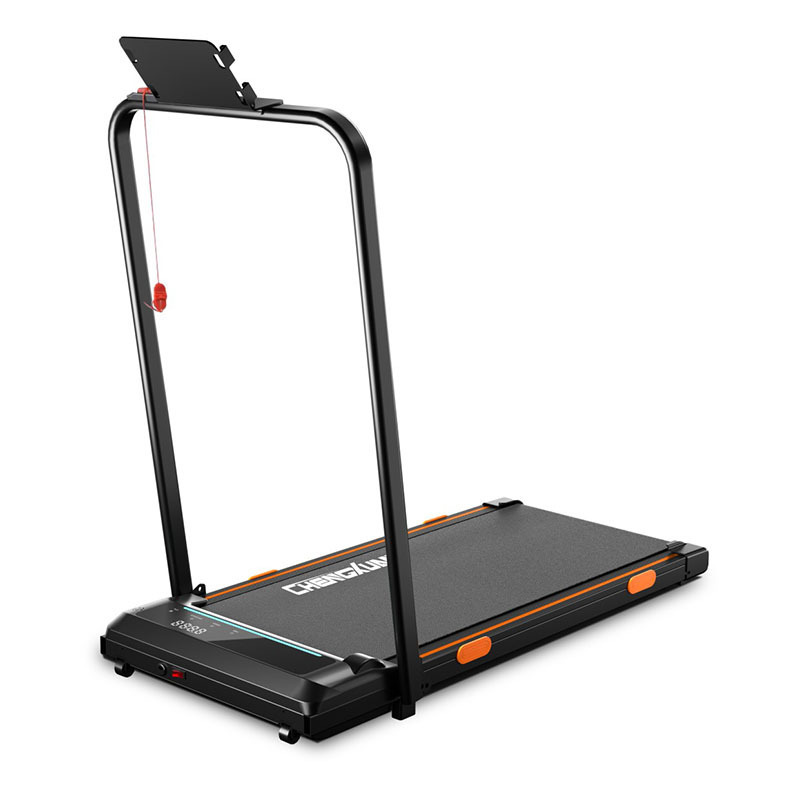
Buyers often use “walking pad”, “under desk treadmill” and “foldable treadmill” as if they were one SKU. They are not. There is no single standard definition of either term, so the practical difference is the specification and the channel, not the product photography. A compact low-profile walking pad is built for intermittent personal use in a home office; a workplace under desk treadmill is specified for longer daily use, a higher duty cycle, a heavier frame and a safety assessment file that an employer can defend. If the end buyer is an employer buying through a procurement process, you are specifying the second format regardless of what the factory catalogue calls it.
That distinction changes which costs land on you as the importer. On a consumer walking pad the cost tends to sit in returns and reverse logistics, because the buyer compares on price, footprint and looks. On a workplace unit the cost sits in freight, storage and deposit value, because the cartons are heavier and bulkier, but the claim rate and the repeat-order pattern usually behave better. A walking pad sold into a workplace tends to generate warranty claims, because the machine is being worked harder than its rating. Decide which cost line you are willing to own before you choose the format, then build the wholesale range around that decision.
For a wholesale programme we normally see both formats on one purchase order: a compact folding unit for the consumer listing, a handrail or higher-duty unit for workplace and office channels, plus a spare-parts line. That is where consolidation earns its keep. Our sourcing categories show the wider product families we already handle; the buying brief template is the format we use to record the channel, the intended duty cycle and the document scope before any factory is approached; wholesale reorder planning covers how a second shipment is scheduled once the first sell-through data exists. A mixed order is not a reason to blur the two specifications: we keep them as separate SKUs with separate claims.
We do not write absolute safety claims, blanket compliance claims or an unqualified certification badge on a listing. In 2026 a US consumer safety regulator issued a widely reported warning on compact walking pads after reports of unexpected speed changes, sudden stops and overheating, with the importer declining a voluntary recall. That episode is the reason this category is documented by model and by serial-traceable test report, not by a badge on a listing. We also do not quote unit prices, MOQ figures, production lead times, duty rates or certificate numbers on a page like this: those belong in a written quotation against a named model and destination.
SECTION 02 / SPEC LINES
A factory quote is only comparable if every supplier prices the same specification. We build the sheet as a set of lines to be confirmed in writing by model, then attach the approved sample and the change-control record to it. The lines below are the ones that most often change the price, the carton cube or the after-sales position, and they are the ones a retail or workplace buyer will ask about later.
Two lines deserve a written answer even when the rest of the sheet looks complete. The first is duty cycle: the recommended continuous running window, the ambient temperature assumption and what happens when the thermal protection trips. The second is noise: a figure without the distance, load and speed conditions is not a figure you can put in front of a workplace buyer. The component sourcing brief is the structure we use for electrical and mechanical lines; custom manufacturing projects explains where a buyer-supplied drawing or firmware requirement fits; the OEM / ODM / OBM comparison sets out who owns the tooling in each case.
The brand decision belongs here too. A private label or generic range decision changes the carton artwork, the manual language set, the logo application method and the after-sales liability. Once a golden sample is signed, the sample approval gates are what stop a quiet component substitution from reaching a full production run.
SECTION 03 / RISK BOUNDARY
There is no single federal rule written specifically for home fitness equipment in the United States. The standards a motorised treadmill or walking pad is judged against are largely voluntary, but that does not make them optional in practice: a retailer asks for the test reports by model, a workplace buyer asks for a safety assessment, and a regulator can still act against a machine that injures people whether or not a standard was cited on the box. The design and manufacture parameters for treadmills sit in the ASTM F2115 family, used alongside the general fitness-equipment standard ASTM F2276; the electrical side is covered by UL 1647 for motor-operated exercise machines. In Europe the CE marking route brings in the low voltage and EMC rules, with stationary training equipment tested against EN ISO 20957-1 for general requirements and EN ISO 20957-6 for treadmills, historically EN 957-6.
A low-profile unit without handrails raises a genuine classification question: whether it falls inside the scope of a given treadmill standard is for the test laboratory to answer in writing, not for a supplier to assert in a listing. We ask for that answer by model, together with the reports behind the safety key, the stop switch, the foot rails and the rear roller guard. Electrical component certificate verification and the industry certification map show how we check the evidence trail rather than accepting a logo on a specification sheet.
IDLE / START
WALK WINDOW
THERMAL CUT-OUT
AFTER-SALES
The 2026 consumer warning is the practical reason for that ruler. Reports concerned machines that changed speed unexpectedly or stopped abruptly, causing falls, alongside overheating and fire incidents. Our response is procedural: require the reports by model, keep them in the buyer file, check the safety key and stop button on the first sample, and never write absolute safety language on the product page or the carton. The US import document map and the compliance selection filter are the checklists we use for the destination side; pre-shipment inspection in China is where the physical checks are actually performed. Classification, applicable standards and declaration wording are decided by the importer of record and qualified advisers in the destination market.
SECTION 04 / LOAD PLAN
This is a bulky, heavy, mains-powered product. Freight is not a footnote: carton dimensions, gross weight, cartons per unit and the pallet pattern decide whether the order travels as a parcel profile or a palletised load, and they decide the chargeable weight. A compact unit that ships as a single carton and a handrail unit that has to be palletised are not substitutes on a retailer listing, even if the product photography looks similar. We plan the load from the carton data upwards, then consolidate the models into one buyer reference so you receive one invoice, one packing list and one document set.
BAY A
BAY B
BAY C
BAY D
CUBE AND WEIGHT
CLOSING THE LOAD
Consolidating wholesale orders and consolidating production from several suppliers cover the mechanics; multi-factory container consolidation is the version we use when the motor, frame and packaging come from different plants. Chargeable weight for air freight explains why a low-density carton can be billed well above its physical weight. For bulky, mixed carton loads we apply the same approach used on mixed lighting shipments: measure first, then decide the mode.
Power configuration is a separate declared line. The machine itself is mains corded, but a remote control, an app-connected console or a rechargeable accessory may introduce a cell. Where a lithium cell is fitted, the applicable UN 38.3 test summary, safety data sheet, packing instruction, marks and carrier acceptance are checked before the load is closed; a dry-cell or coin-cell accessory is declared differently. An invoice that says “fitness equipment” while the transport documents show a battery-fitted accessory is a common reason for a booking to be refused. Lithium battery shipping documents and shipping documents by transport mode set out the paperwork; freight forwarding from China and the freight quote checklist cover what has to be in the request before a rate means anything.
SECTION 05 / EVIDENCE
The table below is a request list, not a claim. Each row is something we ask the factory and the test laboratory to put in writing by model for the destination market you name. Which rows apply is a classification decision for the importer of record and qualified advisers; we do not make that decision for you and we do not certify compliance.
We are a sourcing, QC and freight coordination partner, not a treadmill manufacturer, not the brand owner, not a test laboratory, not a certification body, not a carrier, not a customs authority and not a licensed customs broker. We request and check documents against the agreed brief; we do not classify the goods, we do not certify compliance, we do not make safety claims for the end user, we do not clear intellectual property rights, we do not promise a customs release and we do not promise a transit time.
The practical consequence: we do not write absolute safety wording, blanket compliance or certification claims, or any medical, therapeutic or wellness treatment claim on the page, the carton artwork or the manual. We do not promise a customs release or a transit time. First article inspection and sample approval change control document the approved build; supply chain documentation and the importer of record explanation set out who holds the responsibility for the declaration. The buyer-supplied logo, artwork, app name and any brand reference remain the buyer responsibility; we do not clear intellectual property rights.
SECTION 06 / BRAND AND TOOLING
Most factories in this category offer an existing platform with options: motor rating, speed ceiling, handrail, desk board, incline mechanism, console, remote, app module, colour, logo application and carton artwork. Buying that platform as ODM means the factory holds the tooling and can sell a similar machine to someone else. Commissioning your own tooling, housing or firmware as an OEM project means the tooling ownership and exclusivity have to be written into the agreement before the first payment. That single clause decides whether you are building a brand or reselling a catalogue item.
Branding touches more surfaces than a logo on the frame. The console startup screen, the remote, the manual language set, the rating label, the carton marks, the warranty card and the app listing all have to agree with each other and with the declaration. If the app or firmware is buyer-supplied, the radio evidence has to match that build. Private label manufacturing covers the branding route; custom packaging and packaging and labelling supplies cover the carton, the insert and the barcode position. About our sourcing team describes the role we play: we coordinate, check and consolidate; we are not the factory and we are not the brand owner.
A failed remote or a worn belt turns into a return if no part is available. Ask for the spare-parts list and the replacement-unit route before you quote, not after the first failure. The same discipline we apply to genuine and aftermarket parts sourcing applies here: identify the part, agree who holds the stock, and keep the part number traceable to the approved sample. A mixed wholesale order is a good moment to put a spares bay on the load plan, because the cartons are small and the marginal freight is low once the container is being consolidated anyway.
SECTION 07 / INSPECTION
01
SPEC LOCK
02
SAFETY HARDWARE
03
RUN TEST
04
NOISE AND CONTROLS
05
CARTON AND MARK
06
DOCUMENT SET
Inspection is where the paperwork becomes physical evidence. Pre-shipment inspection in China covers the sampling and the report; sample approval gates cover what happens when a component changes after approval. On the cost side, the itemised landed cost guide explains why carton cube and chargeable weight belong in the same spreadsheet as the unit price. For the destination, US customs entry, UK customs, VAT and EORI and DDP shipping describe the declaration routes we are asked about most often. None of them is a promise that a particular shipment will be released: the importer of record and the destination advisers decide the entry position, and we do not quote duty rates or tax figures on a content page.
SECTION 08 / FAQ
If your question is about a channel we have not covered here, put it in the brief with the destination market and the retailer document requirements. A twelve-month restock calendar is a useful starting point for a repeat-stock programme, and the contact form is the shortest route to a written answer.
Tell us which form factors you want on the purchase order, whether the units go to a consumer channel or a workplace buyer, and which market the documents must serve. We come back with the model options, the specification sheet we would send factories, the report scope to request, and the measured load plan – all on one quote.
COMMERCIAL AND LEGAL POSITION
Our quoted price already includes our margin. There is no separate sourcing fee or commission added on top, and we do not set a strict MOQ of our own. Where a factory sets a minimum for a custom colour, printed carton or new tooling, we tell you in writing before you commit.
We are a sourcing, QC and freight coordination partner, not a treadmill manufacturer, not the brand owner, not a test laboratory, not a certification body, not a carrier, not a customs authority and not a licensed customs broker. We request and check documents against the agreed brief; we do not classify the goods, we do not certify compliance, we do not make safety claims for the end user, we do not clear intellectual property rights, we do not promise a customs release and we do not promise a transit time.
Reviews
There are no reviews yet.