
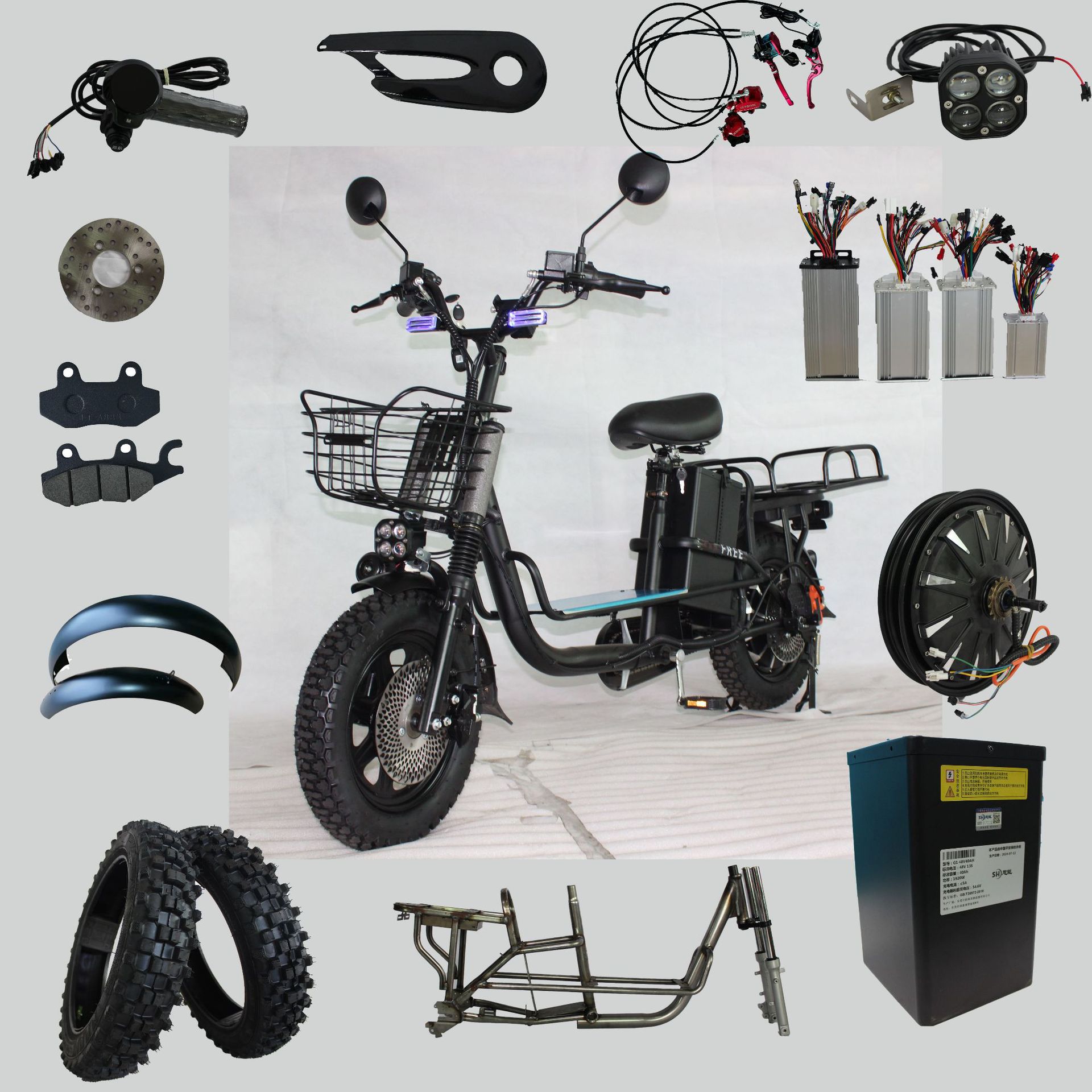
What You Are Actually Buying
A knocked-down kit is not a cheaper motorcycle in a bigger box. It is a documented manufacturing package: a defined level of disassembly, a bill of materials that maps every part to a sub-assembly, drawings your technicians can follow, an identification list for the frames, a test plan for the end of the line, and a document set that a customs authority and a registration office can both read. If any one of those is missing, the saving on paper turns into a stalled assembly line.
That is why we treat the BOM as the primary deliverable and the cartons as secondary. Our guide to CBU, SKD and CKD kits explains how to choose the level; this page is where you request the kit itself. The broader category, including spare parts, sits on our EV and spare parts pillar.
CinoSourcing works on the buy side as a China sourcing agent and freight forwarder. We are not the factory. We put one written kit specification in front of several screened plants and compare what comes back, including the documents each one is willing to issue.
Why Buyers Move to Knocked-Down Kits
Public industry reporting consistently points to local assembly, import-duty structures and local employment requirements as the reasons importers move away from fully built units. We are not going to quote a percentage saving, a tariff line or an effective date on a product page: those depend entirely on the destination and the declared configuration, and they change. The honest statement is that the commercial case is decided by your accountant and your authority, not by a supplier’s marketing page.
What we can confirm is the operational side. A kit changes what you need from a supplier: carton-by-carton identity, a frame identification list, assembly instructions in a language your team uses, a test rig plan, and a spare parts ratio for assembly losses. Our destination document checklist sets out the four layers to confirm before production. Regional context is in the South America guides and Africa guides.
Choosing the Knockdown Level
The three common levels are often discussed as if they differ only by how many bolts are undone. They differ in skill, tooling, testing responsibility and paperwork. Confirm the level in writing before any quotation is compared.
| Level | What arrives | What your operation must provide | Where the risk sits |
|---|---|---|---|
| CBU | Assembled vehicle, ready for registration checks | Import handling, inspection and local registration | Volume per container, and duty treatment by destination |
| SKD | Major assemblies built up, with final assembly left to the importer | A light assembly area, torque tools, a final function check | Ambiguity over which sub-assemblies are actually included |
| CKD | Parts grouped by sub-assembly, with frame and identification lists | A staffed line, fixtures, drawings, end-of-line test rigs and traceability | Missing parts, wrong revision of a drawing, or a BOM that does not match the cartons |
Most disputes come from the SKD row. “Semi knocked down” means different things at different plants, so the quotation must name every sub-assembly that is pre-built and every one that is not.
The BOM Is the Contract
We ask for a versioned BOM grouped by sub-assembly, with a part code, a description, a quantity per kit and a carton reference on every line. A flat list of hundreds of parts sorted by name is not usable on an assembly floor. The revision number matters more than the file format: a drawing from revision A and a carton from revision B will stop a line faster than a missing bolt.
Electrical items deserve their own section. Controller, display, throttle, harness and charger must be matched as one system, with connector pinout and protocol recorded. Our controller matching checklist and battery and charger matching guide cover those checks. Where a kit includes energy storage, the battery transport documents need to be planned before the container is booked.
Drawings, Tests and Identification
Assembly support is a deliverable, not a favour. We request step drawings or video references in an agreed language, a torque and fastener schedule, a wiring routing diagram, and an end-of-line test plan covering brake function, lighting, throttle response, display communication and a low-speed run check. Frame or VIN lists are matched to the shipped units and to the invoice, so a registration office can reconcile the paperwork with the physical vehicles.
None of this implies that a kit is approved for road use. Approval evidence is a separate, destination-specific layer, described in our import documents checklist. We write “confirm by destination” and never print a certificate number, an effective date or a duty rate.
Carton Identity and the Document Package
A kit shipment fails quietly when cartons are anonymous. Every carton should carry a kit identifier, a sub-assembly code, a carton sequence and the BOM revision. The packing list, the invoice and the carton marks must tell the same story.
| Document | What it must reconcile with | Why an importer checks it |
|---|---|---|
| Versioned BOM | Carton marks, assembly drawings and the quotation configuration | Prevents a line stop caused by a revision mismatch |
| Packing list by carton | Physical carton sequence and the invoice | Lets a receiver identify a shortage without opening every box |
| Frame or VIN list | Shipped frames and the registration application | Avoids a vehicle that cannot be matched to its paperwork |
| Commercial invoice and origin documents | Declared configuration and the chosen incoterm | Supports customs clearance and a named importer of record |
| Destination approval evidence | The exact level and configuration being imported | Confirmed by the destination authority, not by the supplier’s catalogue |
Our DDP shipping page explains how import responsibility is allocated, and the custom packaging service covers carton marks and artwork. For a first, smaller kit order, see the small-batch route.
Where Our Role Sits
We compare kit offers against one specification, coordinate samples and a pilot carton set, verify the factory through our factory verification process, arrange pre-shipment inspection at carton and BOM level, supervise loading, and consolidate any extra spare parts from other plants through the approach in our spare parts consolidation guide. Branding on frames, battery boxes or cartons runs through the private label programme.
Questions Assembly Buyers Ask First
Do CKD kits automatically save import duty?
Not automatically, and we do not quote a saving. Duty treatment depends on the destination, the declared configuration and the local rules in force when the shipment clears. Confirm the treatment with your broker before choosing a knockdown level.
What is the minimum order for a kit programme?
We do not publish a MOQ because it depends on the level, the model and the tooling a plant must set up. Tell us your assembly capacity and planned volume and we will return the options each screened supplier can actually support.
Can I mix two models in one container?
Often yes, provided the BOM, carton marks and frame lists are kept separate by model. Mixed kits without separate identity are a common cause of assembly errors.
Who is responsible for end-of-line testing?
Your assembly operation is. We make sure the test plan, drawings, torque schedule and wiring diagram are part of the kit deliverable before production, and that the supplier agrees what a passing result looks like.
Are you the manufacturer of these kits?
No. We are a China sourcing agent and freight forwarder working for the buyer. Factory identity and capability evidence are shared during the quotation and verification process.
See the service overview, the FAQ and all sourcing categories, or use the contact page.
Need a Quote? Message Us on WhatsApp
You have reached the end of the kit specification, so here is the direct line. Send your market, knockdown level, assembly setup, planned volume and the documents your authority expects, and our sourcing team will return comparable offers, a sample carton route and a freight plan.
Chat on WhatsApp → Use the Quote Form
WhatsApp and phone: +86 186 7676 3055 | Email: info@cinosourcing.com
It helps to state whether you are considering CBU, SKD or CKD, what tooling and test rigs your line has, the model mix, the destination port and which approval or battery documents are required. A current BOM or a supplier link is enough to start. No obligation and no long form.


Reviews
There are no reviews yet.