
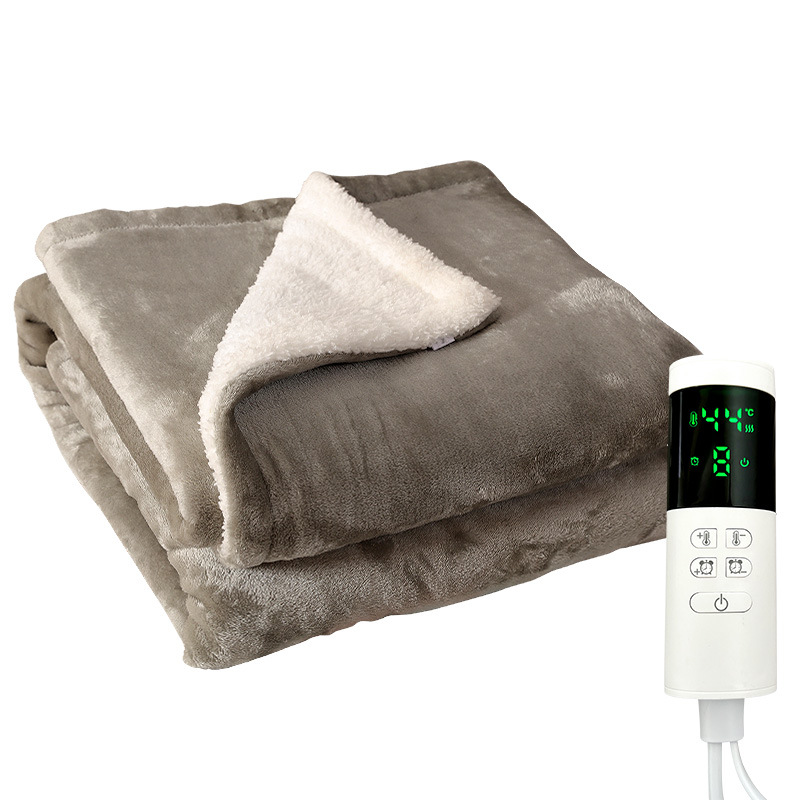
Why This Product Sells
Heated blankets are a category that comes back every winter, and in 2026 it is coming back from a higher base. The reason is not fashion. It is the cost of heating a whole home. Consumer advice in the UK has spent this autumn repeating one idea: heat the person, not the room. Retailers have put heated throws into early Black Friday promotions, and energy suppliers have been distributing them to households trying to cut bills. A product that solves a visible, recurring problem needs very little explanation in a short video, which is why it travels well on social storefronts, marketplaces and seasonal gift guides.
For a seller, the format is unusually flexible. One supply chain can produce a heated throw for the sofa, a wearable heated wrap or shawl, an underblanket for the bed, a 12 V car blanket and a smaller heating pad. Those are separate listings with different compliance and freight profiles, but they share fabric, heating element, controller and packaging suppliers. That is exactly the kind of family where an independent sourcing partner adds value: you can build a range without signing five separate supplier agreements and then reconciling five delivery schedules yourself.
There is one timing point that catches new buyers out. Retail demand peaks in late autumn and early winter, but wholesale decisions are made a season ahead. A page published now is not chasing this week’s retail orders. It is meeting importers, private-label teams and marketplace sellers who are locking in next season’s range, certification and packaging. That is why we deliberately do not put a year in the title. The seasonal wave returns, and the page should still be correct when it does.
If you are building a winter or gifting range, our guide to trending products and the TikTok Viral Hot Picks category show the other SKUs we can consolidate into the same shipment.
Key Specifications
We source to your specification rather than sell a fixed catalogue item, so the table below lists what belongs on the RFQ, not invented numbers. Ask each factory to complete it in writing. A quote that leaves these rows blank is not comparable with one that fills them in.
| Specification | What to put on the RFQ | Why it matters |
|---|---|---|
| Format and size | Throw, wearable wrap, underblanket, car blanket or heating pad; ask for the size sheet in centimetres and inches | Size drives fabric cost, element length and carton cube |
| Fabric | Flannel, coral fleece, sherpa or polar fleece; face weight, backing, dye lot and colour options | Colour and hand-feel are the first thing a buyer photographs; dye lots cause shade complaints |
| Heating element | Wire or other element, number of zones, layout, and how it is fixed inside the layers | Determines even heat and how the product survives washing |
| Controller | Heat levels, timer, detachable or fixed, connector type, spare controller availability | The controller is the most common source of returns and of certificate mismatches |
| Safety functions | Overheat protection, auto shut-off behaviour, and the test report covering the exact model | Regulators repeatedly flag missing overheat protection and under-rated cords |
| Power source | Mains plug-in, 12 V car, USB or battery; declare voltage, frequency and plug shape per destination | Changes certification, customs classification and transport rules |
| Washability and labelling | Machine-washable claim, care label, fibre content, instruction leaflet language, retail packaging | Textile labelling and electrical instructions are separate compliance workstreams |
| OEM scope | Logo method, printed box, barcode, importer name and address on label | Custom artwork can change what the test report has to cover |
Declare the power source first. A mains plug-in throw and a USB or battery-powered wrap may look identical in a photograph, but they sit on different certification paths, different customs classifications and different transport rules. Deciding this after samples are made is one of the most common and most expensive changes in this category.
The failure points are consistent across factories: heating wire that breaks down after repeated washing, controllers that drift out of calibration, connectors that run hot, and non-metallic parts that soften near the element. Do not accept “we have certificates” as an answer. Ask for the actual test report, the model number it covers, the issuing laboratory, and whether it matches the exact voltage, plug and fabric you intend to order. We verify the factory and the paperwork before a deposit moves.
Private-label work usually covers fabric colour, size, stitching, embroidered or printed branding, retail box, instruction leaflet and plug type. Our notes on private label manufacturing and custom packaging explain how those items are quoted separately from the unit price.
MOQ and Lead Time
We will not print a minimum order quantity or a lead time on this page, because neither belongs to a product. Both belong to a specific factory, a specific fabric, a specific controller and a specific packaging run. Any number written here would be wrong for half the enquiries we receive, and it would age badly the moment a supplier changes terms.
What we do instead is make quotes comparable. Ask every supplier to break the price into its parts, then ask for the same quote at several quantity breaks so you can see where the unit price actually moves.
| Quote line | What to ask for | What it reveals |
|---|---|---|
| Fabric and trim | Face weight, backing, dye lot, minimum per colour | Whether a low price is a lighter fabric |
| Element and controller | Element type, controller model, spare units | The two components that dominate returns |
| Plug and cord set | Destination plug, cord length, rating | Whether the quote is for your market at all |
| Testing and documentation | Which reports exist, which model they cover, who pays for re-testing | Hidden cost after a design change |
| Packaging and set-up | Box, print, barcode, artwork and any set-up charge | Costs that appear only on the final invoice |
A very low unit price paired with an undefined testing or set-up line is a warning sign: the cost usually reappears as a change order once you have committed. Ask at quote stage what an engineering change costs, how many sample rounds are included, and who pays if a fabric or controller revision requires a fresh test.
Samples come before any deposit decision. We arrange samples from more than one workshop, keep an approved reference sample, and reconcile the production run against it. Our China sourcing agent guide explains how we run that comparison and where the service fee sits relative to the factory invoice.
Shipping and Delivery
This is where heated blankets differ from the small gadgets most sourcing pages talk about. The product is both a textile and an electrical appliance, and customs authorities do not all treat it the same way. A blanket with an integrated heating element may fall under a textile heading in one market and an electric heating appliance heading in another, with different duty rates, declaration elements and supporting documents. Do not let a factory choose the classification on your behalf. Have a licensed customs broker confirm it against the physical sample and the destination country before the commercial invoice is issued. Our landed cost guide walks through why the classification line changes the total cost, not just the duty line.
Safety documentation is market-specific. The table below is a checklist of what to request, not a claim that any product is certified.
| Market | Documents to request from the factory | Common gap we check for |
|---|---|---|
| United States | Recognised safety listing or test report for the exact model, plus electromagnetic compliance where applicable | Report covers a similar model, or a different voltage and plug |
| European Union | Declaration of conformity supported by low-voltage and EMC testing, plus restricted-substance compliance | Declaration exists but no test report behind it |
| Great Britain | Conformity documentation under the UK marking regime, plus English instructions and correct plug | EU paperwork reused without the UK declaration |
| Japan | Documentation under the mandatory electrical appliance scheme | Plug and labelling prepared for a European shipment instead |
Voltage, frequency, plug shape, label language and instruction leaflet all follow the destination. We check that the documents name the exact model, plug and fabric being shipped, not a neighbouring product from the same factory. Certification is issued to a model, not to a company, and we are a sourcing and freight partner rather than a certification body.
Separate plug-in and battery goods before booking. USB or battery-powered wraps can fall under dangerous-goods transport rules that do not apply to a mains throw. Mixing them into one consolidation without declaring it is how bookings get pulled at the last minute. Tell us the power source for every SKU at RFQ stage and we will plan the consolidation accordingly.
For mixed winter ranges, we receive goods from several factories at our Shenzhen warehouse, run AQL 2.5 pre-shipment inspection, repack where needed, and combine the SKUs into one shipment with a single customs entry. See our services for door-to-door DDP routes, and our dropshipping set-up if you sell direct to end customers rather than importing in bulk.
Get a Factory Quote
Send us the destination market, the format you want (throw, wearable, underblanket, car or pad), fabric preference, size, plug and voltage, the documents your sales channel requires, packaging format and the quantity breaks you want priced. We will come back with comparable quotes from vetted workshops, sample arrangements, a document check, an inspection plan and a consolidated door-to-door freight option. Get a quote or message us on WhatsApp with a photograph or link to the product you have in mind.
When you may not need us: if you already hold a current safety report for the exact model, work with a factory you have audited yourself, and ship one SKU to one market on a regular schedule, an independent agent adds little. Where we earn our keep is when several factories, several SKUs, several compliance regimes and one delivery deadline have to line up.
Frequently Asked Questions
What is the difference between a heated throw and an electric underblanket?
A heated throw is designed to go over the person on a sofa or chair, while an underblanket sits on the bed as part of the bedding. They differ in size, element layout, controller and the safety standard applied. Keep them as separate line items in an RFQ, because one factory’s throw certificate will not automatically cover its underblanket.
Do I need UL or CE documentation to import heated blankets?
That depends on the destination market and on how the product is powered. Ask a licensed broker or local compliance adviser which regime applies, then request the actual test report for the exact model, voltage and plug. We check documents and arrange sample testing; we do not issue certificates or make conformity claims on a supplier’s behalf.
Can I private label a heated blanket?
Yes, typically across colour, size, stitching, branding, retail box, leaflet and plug type. Be aware that changing the fabric, heating element or controller can require fresh testing. Ask the factory in writing which changes invalidate the existing report before you pay for artwork.
Can USB heated wraps ship with plug-in throws in one consolidation?
Often yes, but only if the power source for every SKU is declared before booking. Battery-powered goods can be subject to transport rules that do not apply to mains products. Mixing them without declaration is a common cause of delayed or refused bookings.
How should I compare quotes from three Chinese heated blanket factories?
Insist on the same specification sheet, the same quantity breaks, the same incoterm and the same packaging scope from all three. Then compare the itemised lines rather than the headline unit price, and check which test reports are included. Our sourcing agent guide shows the comparison template we use.
Need a Quote? Message Us on WhatsApp
You have reached the end of the product details, so here is the direct line. Send your enquiry to our sourcing team and we will come back with comparable factory quotations, sample options, a document check and a freight plan.
Chat on WhatsApp → Use the Quote Form
WhatsApp and phone: +86 186 7676 3055 | Email: info@cinosourcing.com
Tell us your destination market, the model or version you want, quantity breaks, packaging scope and the documents your sales channel requires. A photograph or a link to a reference product is enough to start. No obligation, and no need to fill in a long form.

Reviews
There are no reviews yet.