
The Second Order Is the Business
A first vehicle sale is a transaction. The second, third and tenth spare parts orders are the business. Dealers who run a service network know that a small box of correctly matched brake shoes, throttles, displays, harnesses and switches keeps a fleet earning, while a container of ambiguous cheap parts ties up cash and generates returns.
That is the product on this page: not a single component, but a reorder kit built around your model list and consolidated from several plants into one shipment. Our guide to consolidating spare parts from multiple Chinese factories explains the method; this page is where you request the kit. The category overview is on the EV and spare parts pillar.
CinoSourcing works on the buy side as a China sourcing agent and freight forwarder. We are not a parts manufacturer, which is precisely why a multi-plant kit is practical: no single factory has to be good at every small component.
What Goes Into a Reorder Kit
The kit is assembled from your consumption history, not from a supplier’s catalogue. We start with the vehicle families you service, then group parts by how often they are replaced and by which plant can supply them. The table below shows the usual groups; the actual SKU list is built with you.
| Group | Typical lines | Why it repeats | What must be confirmed per line |
|---|---|---|---|
| Braking wear | Brake shoes or pads, levers, cables and return springs | Highest-frequency safety replacement on working vehicles | Drum or disc interface, dimensions and part code |
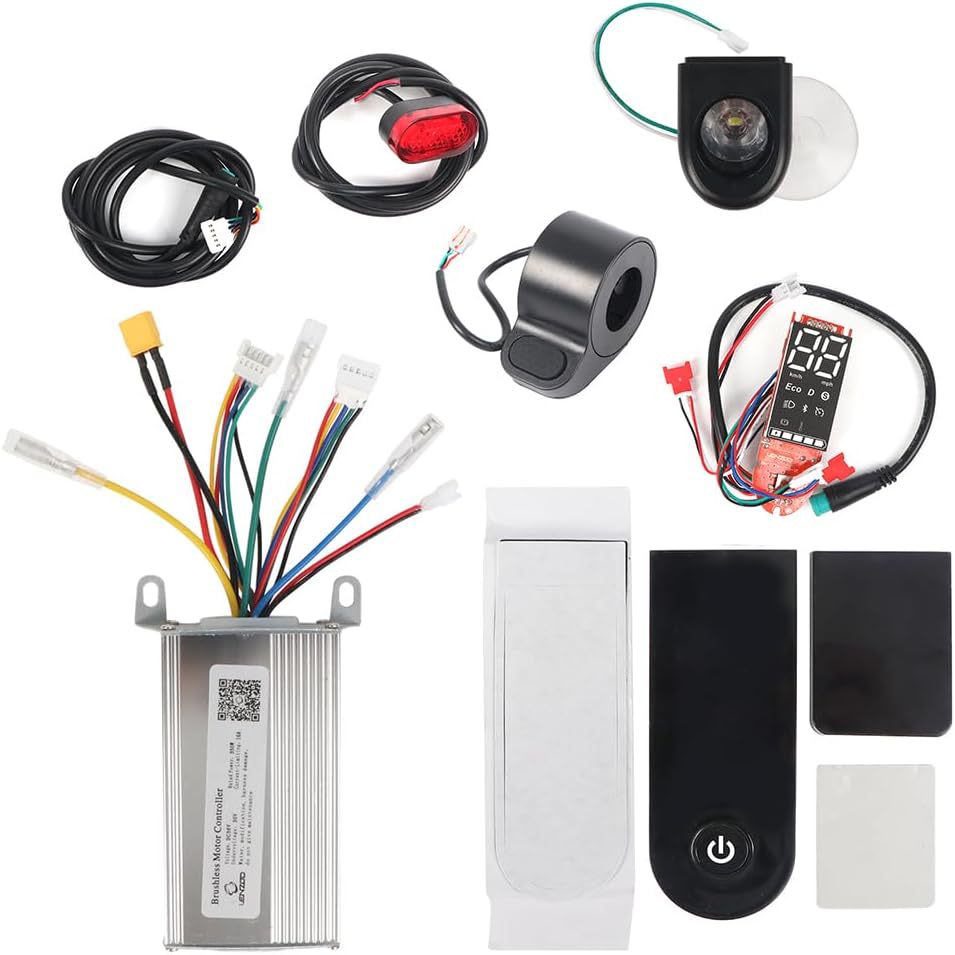
| Control and instrumentation | Throttle, display, switches, brake sensors and horns | Exposure to weather and handling damage | Signal type, display protocol and connector pinout; see the controller matching checklist |
| Electrical distribution | Harnesses, fuses, relays, lighting and charger connectors | Vibration and water ingress at connectors | Wire length, connector family and pin order |
| Drivetrain and chassis wear | Bearings, seals, fasteners, suspension bushes and axle wear parts | Rough-road load and high daily mileage | Fitment drawing and mating assembly; see the rear axle guide |
| Body and consumables | Mirrors, grips, covers, reflectors and labels | Crash damage and cosmetic refresh | Mounting geometry, colour and any artwork requirement |
Controllers, rear axles and battery systems are listed separately in their own product pages. A reorder kit is for the long tail, not for the three large assemblies that need their own fitment process.
One SKU Register Across Several Factories
Every line gets one SKU code, one English description, one fitment reference to the vehicle family, one supplier code, one carton mark and one document owner. Without that register, a mixed shipment becomes unmanageable the moment a warranty claim arrives: nobody can say which plant supplied the failed part or which batch it came from.
We also record which lines are interchangeable across models and which are not. Interchangeability is a tested result, not a convenient assumption, and it is the single biggest lever on how much stock a distributor has to carry. Our multi-factory consolidation approach and the factory verification process describe how supplier capability is recorded.
Fitment by Model, Not by “Universal”
Trade listings describe small parts as universal more often than any other category. A throttle that fits one harness and a display that speaks a different protocol are not a kit, they are a returns problem. We tie each line to a named vehicle family, keep the connector and interface evidence in the approval file, and mark any line that is genuinely cross-model as such only after a sample has been checked.
Where the kit contains a charger or any energy-storage accessory, the battery and charger matching guide applies, and the battery transport documents have to be planned before the container is booked. A single undeclared lithium item can hold an entire consolidation.
Sampling at SKU Level
A mixed carton cannot be inspected as if it were one product. Sampling has to happen at SKU level, with a different check for a brake shoe than for a display. We agree the plan before production and record it per line.
| Level | What is checked | Record retained |
|---|---|---|
| SKU | Identity, fitment reference, quantity per carton and label accuracy | SKU-by-SKU check sheet against the register |
| Interface | Connector, pin order, dimensions and mating part for electrical or braking lines | Photograph set and the approved golden sample reference |
| Carton | Carton mark, sequence, mixed-content declaration and packing list agreement | Carton-level packing list and loading photographs |
| Shipment | One document set covering all plants and all SKUs | Consolidated invoice, packing list and the agreed inspection summary |
The pre-shipment inspection service covers the mechanics, and the custom packaging service handles carton marks and artwork. For retail or e-commerce channels, see the FBA prep service and the dropshipping service.
Freight Shape and the Reorder Point
Mixed spare parts are a consolidator’s problem in both directions. Many small parts are light but bulky, so volumetric weight matters; a few heavy lines such as axle wear parts pull the average the other way. We plan carton sizes, palletisation and the loading sequence with both in mind, and record the delivery term and importer of responsibility as described on our DDP shipping page. The document set for a parts-only consignment is in the import documents checklist.
Finally, we agree a reorder point for the fastest-moving lines with the buyer, so the second shipment is triggered by consumption rather than by a stock-out. That is the difference between a one-off mixed carton and a supply programme. Smaller first kits can follow the small-batch sourcing route; destination context is in the global sourcing guides.
Questions Distributors Ask First
Can I choose which parts go into the kit?
Yes, and you should. The kit is built from your model list and consumption history, not from a fixed supplier bundle. Send the SKU list or even a rough workshop spreadsheet and we will structure it into one register.
Do the parts come from one factory?
Rarely, and that is the point of consolidation. Different plants are better at braking, harnesses and body parts. We keep one SKU register, one carton mark system and one document set across all of them.
Are the parts universal across my fleet?
We do not assume that. Each line is tied to a named vehicle family with connector or interface evidence, and a line is marked cross-model only after a sample check. Interchangeability is a test result, not a listing word.
How do you inspect a mixed carton?
At SKU level. Identity, fitment reference, quantity and label are checked per line, then carton marks and the packing list are reconciled, then one consolidated document set is issued. A single overall visual check is not sufficient.
Can a kit include a battery or charger?
It can, but those lines need separate matching and transport planning. Battery-related items must be declared correctly for carriage, and the required documents are planned before the container is booked.
See all sourcing categories, the service overview, the FAQ and the contact page.
Need a Quote? Message Us on WhatsApp
You have reached the end of the reorder kit, so here is the direct line. Send your market, vehicle model list, SKU list, quantity breaks and the documents your channel expects, and our sourcing team will return comparable offers, a consolidation plan and a freight route.
Chat on WhatsApp → Use the Quote Form
WhatsApp and phone: +86 186 7676 3055 | Email: info@cinosourcing.com
It helps to attach the parts spreadsheet you already use, even if it is rough, plus the vehicle families you service and the destination port. A photograph of a current carton or shelf is enough if you do not have a list yet. No obligation and no long form.


Reviews
There are no reviews yet.