
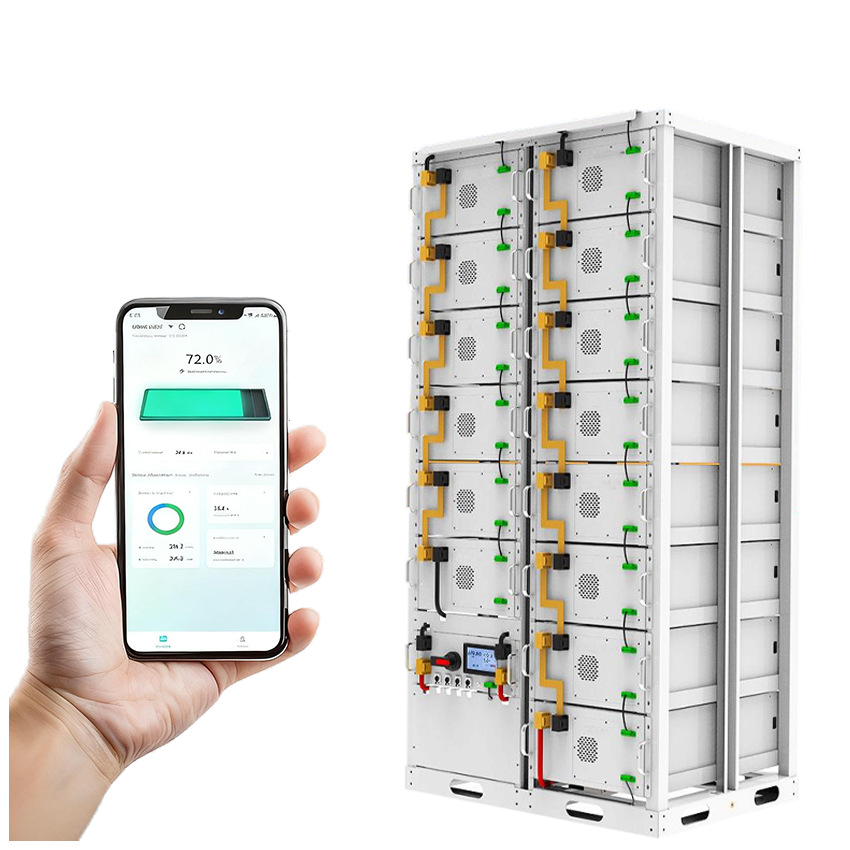
Why the Rack Format Changed the Buying Question
Storage used to be quoted as a capacity number. In 2026 a commercial buyer is more likely to ask whether the stack arrives pre-wired, whether it has already been cycled as a complete unit, and whether it will speak to the inverter chosen six weeks earlier. Those are integration questions, and no cell datasheet answers them. A rack battery is a system product even when the catalogue lists it as a module.
The form factor matters commercially. A 19-inch stack fits a standard electrical room, scales by adding modules in series or parallel, and keeps DC current lower in a high-voltage architecture, which reduces cable size and resistive loss. That is why distributors serving commercial and industrial projects increasingly standardise on one rack platform rather than assembling loose modules on site. Our equipment sourcing hub sets out where this fits in a project BOM.
Cells, Traceability and the Grade Question
Ask which cells are in the pack, who made them, and what happens if that supplier changes. Recovered or lower-grade cells appearing in a pack sold as new is one of the persistent failures in this category, and it is invisible in a finished enclosure. Request the cell model, the lot range, the pack assembly record and a written change-control rule. A cell test report is evidence about a cell; IEC 62619 and IEC 63056 address the battery system, and a residential installation may bring additional references. None of them is a substitute for a batch-specific functional record.
Capacity claims also need a test condition. Usable energy, continuous power, depth of discharge, operating temperature and cycle life are measured under stated assumptions that differ between suppliers. We print none of those figures on this page; we ask for a versioned datasheet naming the condition, then verify the behaviour on your own sample. See our stationary battery storage guide for the full evidence chain.
Transport Paperwork Is a Product Feature
A lithium battery is a dangerous-goods consignment before it is a storage product. Carriers ask for a test summary covering the altitude, thermal, vibration, shock and short-circuit series, a current safety data sheet, the applicable packing instruction and declaration, and evidence of the state of charge at dispatch. Air and sea do not accept the same evidence, and a report describing a loose cell does not automatically cover the installed pack. Each page has to match the cell model, the pack layout and the configuration actually loaded.
We arrange that evidence, the export paperwork and the consolidated booking, and we state in writing who is importer of record. Our lithium battery shipping documents guide walks through the four layers; our DDP service page explains the delivery-term side. Rates and transit windows stay off a public page because they move with pack configuration, carton geometry, destination and volume.
| Layer | Failure it prevents | Document to hold |
|---|---|---|
| Cell and pack traceability | Recovered cells in a new pack | Cell model, lot range, assembly record, written substitution rule |
| System safety | Protection that was never tested | Model-matched system reports, BMS functional and protection-trigger record |
| Transport | Carrier refusal at origin | Test summary, SDS, packing instruction, declaration, state-of-charge evidence |
| Market and import | Non-compliant online offer | Operator determination, label and manual set, broker-confirmed classification |
The Compatibility List Is Worth More Than a Warranty
A rack that cannot report state of charge to the inverter is a very expensive cupboard. Ask for the tested compatibility list, the protocol document and a joint commissioning record produced with the exact inverter you plan to ship. Protocol adaptation is sometimes offered on volume orders, but it is a firmware project with its own approval file, not a tick box. Our inverter sourcing guide covers the same seam from the other side.
Inspection Means Running the Stack
Visual checks catch dents and label errors; they do not catch a BMS that will not balance cells. Agree before the deposit on a written protocol covering charge and discharge cycling, cell voltage spread at rest, protection triggers, communication with the paired inverter, insulation checks and long-duration stability. Settle who funds rework, who signs the release and who keeps the failed samples. Our pre-shipment inspection service describes how that record is captured. A factory quality-system certificate is not a batch release.
Consolidation and the Repeat Order
Storage rarely ships alone. A rack stack, spare modules, an inverter, a BOS kit and printed cartons can often travel as one consolidated shipment with one customs entry, provided the dangerous-goods portion is declared and packed correctly. That is also where a trial order becomes a standing programme: the same approval file, cell supplier and protocol list sit behind every reorder. Buyers testing a single-unit route can begin through our China dropshipping agent service and scale without changing supplier.
Spare Modules, Returns and an Enquiry That Fits on One Screen
Decide the spare-module list during specification, not after the first service call. Record serial ranges, agree who holds failed units and put charging, storage and installation instructions into the local-language manual. Most returns in this category trace back to a mismatch between a datasheet and a real commissioning environment; closing that gap at sample stage is cheaper than any returns policy.
Send the inverter model, the capacity plan, high or low voltage architecture, market and quantity breaks, artwork and manual languages, the documents your forwarder requires, and whether samples come first. Send an enquiry or use either WhatsApp button. We publish no unit price, minimum, delivery window or duty amount here; all four belong to one approved specification and destination.
Frequently asked questions
Can you ship a single rack as a trial?
Yes, subject to the destination’s dangerous-goods rules. We would still put the later batch on the same approval file so the test is meaningful. Ask us to set the per-parcel and per-batch cost models side by side before you decide.
Do you issue the UN38.3 test summary or the SDS?
No. We collect them from the cell maker, the assembler and the testing laboratory, then check that each names the pack actually loaded. We are not a certification body and offer no legal opinion; have a licensed broker confirm the final transport position.
How do we avoid a different cell in the second order?
By freezing the bill of materials to a retained golden sample, recording serial ranges and requiring written notice before any substitution. Our factory verification process covers how that rule is agreed before a deposit moves.
Can you put our brand on the rack and ship to a fulfilment centre?
Yes. At origin we handle approved artwork, a fixed model name, translated manuals, inner protection, carton marks, labelling and the inbound booking under the agreed delivery term. Platform-side listing compliance remains yours, and we state that split in writing.
Need a Quote? Message Us on WhatsApp
You have made it to the bottom of the battery specification, so here is the direct line. Send the inverter it must talk to, your capacity plan, market and quantity breaks, and we will return comparable quotations, sample options and a dangerous-goods freight plan.
Chat on WhatsApp → Use the Quote Form
WhatsApp and phone: +86 186 7676 3055 | Email: info@cinosourcing.com | www.cinosourcing.com
It helps to name the cell supplier you will accept, the BMS protocol, rack or cabinet format, spare module needs, label and manual languages, and the transport documents your forwarder or channel requires. A datasheet or a photo of the existing bank is plenty to begin.
Reviews
There are no reviews yet.