
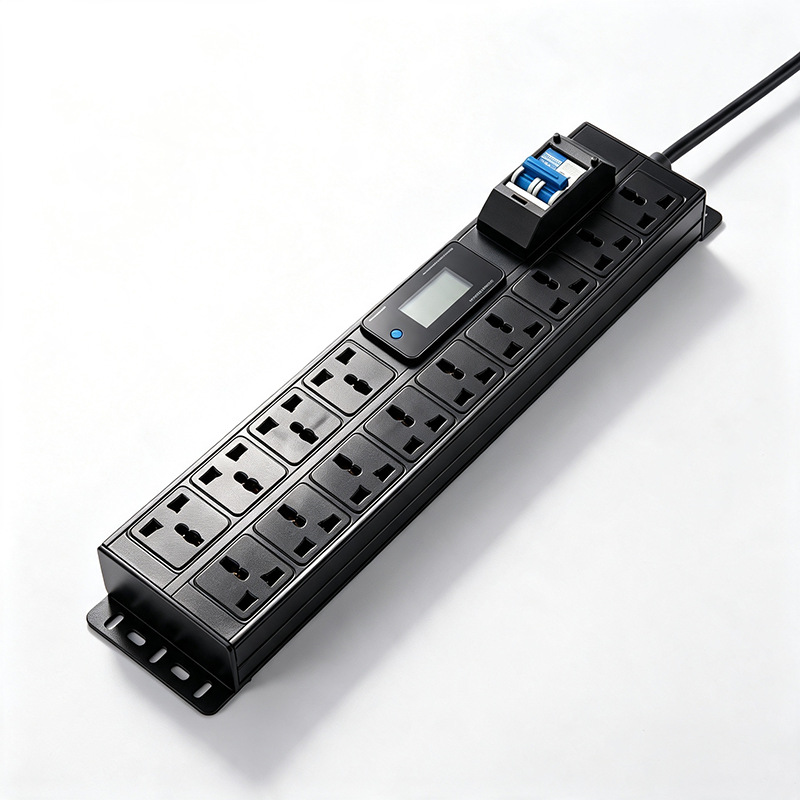
Why This Product Sells
Power distribution is the least glamorous part of an AI rack and the hardest one to get past customs. A rack power strip is not a consumer extension lead with a longer case. It is an electrical assembly whose plug pattern, voltage, phase, branch protection, monitoring electronics and safety approval must all match the facility and the destination market. Get one of those wrong and the goods can be held, the installation can fail inspection, or worse, the load can be unprotected.
The demand driver is straightforward: as more accelerators are packed into a cabinet, rack-level power rises and the distribution path becomes a design constraint rather than an accessory. Public infrastructure guidance from 2026 recommends selecting rack distribution units against expected rack density, single-phase or three-phase supply, monitoring needs and A/B feed redundancy. Industry commentary also points out that AI workloads create rapid load swings, which makes metering and dependable distribution more valuable than a bare outlet bank.
This is a category where a sourcing agent earns its keep on paperwork. Approvals are country-specific and model-specific: a declaration covering one SKU does not automatically cover a variant with a different plug, a metering module or a network interface. Networked units add electromagnetic and firmware-security expectations in several markets. Custom configurations can also trigger a fresh approval cycle, which a buyer needs to know about before committing to a project date.
We supply distributors, colocation fit-out contractors, modular data-centre builders and systems integrators. Our role is to compare vetted factories on test capability and traceability, obtain model-matched documents at sample stage, confirm the destination requirements with the right professionals, and then move long, easily damaged units through export packing and consolidated freight without bending a chassis.
Key Specifications
| Item | What we confirm with you |
|---|---|
| Electrical configuration | Input voltage, phase, current rating, feed arrangement and redundancy scheme matched to the facility design. |
| Outlet configuration | Outlet type, count, grouping and branch protection, matched to the equipment plugs in the target market. |
| Function level | Basic, metered, monitored or switched, including any remote control or environmental sensor requirements. |
| Network and firmware | Management protocols, secure update capability, access control and the supplier’s firmware support commitment for intelligent units. |
| Safety evidence | Model-matched electrical safety documentation and routine production tests such as dielectric withstand and ground continuity. |
| Mechanical and packing | Mounting format, chassis length, enclosure material, and drop-resistant export packaging for long vertical units. |
We do not publish a voltage, current, plug pattern, certification number or duty rate on this page. Every one of those is destination-specific and must be confirmed against the exact SKU being ordered. A universal figure would be misleading and would age badly; we confirm the configuration in writing at sample stage instead.
What to Confirm Before Quoting
| Item | What we confirm with you |
|---|---|
| Destination market | Country or countries of import and installation. This drives the plug, approval and documentation set. |
| Facility supply | Available voltage, phase, upstream capacity, and whether A/B redundant feeds are required. |
| Load and outlets | Expected and peak rack load, outlet types and counts, and any branch protection requirements. |
| Intelligence level | Whether metering, switching or remote management is needed, and what security or protocol requirements apply. |
| Customisation | Any non-standard length, outlet layout, label or firmware change, and whether it triggers a new approval cycle. |
| Quantity and packing | Sample and batch quantities, spare-part expectations, carton and pallet requirements, and delivery terms. |
Never accept a verbal assurance of compliance. Ask for the underlying third-party test reports, the factory’s routine production test records and the exact model family each document covers, then verify the listing is current. We build that check into the sample-approval stage rather than discovering a gap at the border. Itemised quotations also make it visible whether a cheaper unit has quietly dropped the metering board or the surge protection.
Documents and Compliance
| Item | What we confirm with you |
|---|---|
| Market access documents | Destination-specific electrical safety and electromagnetic documents for the exact SKU, plus the declaration of conformity where applicable. |
| Factory test evidence | Routine production safety tests, burn-in records and serial-range traceability for the batch shipped. |
| Material and firmware | Restricted-substance documentation, enclosure material declarations, and firmware version and update policy for intelligent units. |
| Import and shipment | Commercial invoice, packing list, origin documentation, and a destination-specific classification determined by a licensed broker. |
Approvals do not travel well. A document that satisfies one market does not satisfy its neighbour, and some destinations require a local representative or a local type approval before the first unit is imported. Networked distribution units add a further layer of obligations around electromagnetic behaviour and device security. We are a sourcing and freight partner, not a certification body or legal counsel; the destination determination should be confirmed by a licensed broker or a qualified local adviser.
How We Source and Ship It
| Stage | What happens |
|---|---|
| 1 · Requirement capture | We record destination, supply, load, outlets and management requirements in a written specification. |
| 2 · Factory screening | Vetted factories are compared on in-house test capability, component traceability and approval coverage. |
| 3 · Sample and document check | Sample units are tested and every document is checked against the exact model before any deposit. |
| 4 · Batch and inspection | Production units carry routine test records and serial traceability; we inspect and verify packing before dispatch. |
| 5 · Freight and delivery | Long units are palletised and protected, then shipped under the agreed terms, alone or consolidated. |
Logistics is part of the product here. Long vertical units are prone to bent chassis, broken mounting tabs and damaged display or network modules, and a single damaged pallet can delay a whole hall fit-out. Our landed-cost breakdown includes the packing, volumetric weight and handling assumptions that a unit price hides, and our sourcing process explains where inspection sits before payment.
Common Sourcing Mistakes
The first mistake is assuming one approval covers a whole family. A plain unit and a networked unit are different products from a regulatory point of view, and a change of plug, metering board or enclosure can put the delivered goods outside the document you were shown. Verify the document against the exact SKU, and treat any custom configuration as a new approval question.
The second is optimising the unit price while ignoring packing. A long vertical distribution unit travels badly in a thin carton, and the cost of one damaged batch exceeds the saving many times over. Specify end protection, anti-static bagging for intelligent modules, palletisation and a drop-tested carton design as explicit line items in the supply agreement.
Frequently Asked Questions
Can you supply PDUs configured for our country’s plugs and voltage?
Yes, configuration is part of the specification. We will ask for the destination market and facility supply first, then confirm the plug pattern, voltage, phase and documentation against the exact SKU. We do not quote a universal configuration.
What compliance documents do you provide?
Destination-specific safety and electromagnetic documents for the exact model, the declaration of conformity where applicable, factory routine test records and serial traceability. Which documents are legally sufficient is a destination determination for a licensed broker or qualified local adviser.
Do intelligent PDUs need extra checks?
Yes. Units with metering, switching or network interfaces add electromagnetic and firmware-security considerations, and the firmware version and update policy become part of the commercial agreement. We capture these at sample stage.
How do you prevent transit damage on long vertical units?
We specify end protection, anti-static protection for electronic modules, reinforced cartons, palletisation and a verified loading plan, then inspect before dispatch. Packing is treated as a quoted line item rather than a factory default.
Need a Quote? Message Us on WhatsApp
You have reached the end of the product details, so here is the direct line. Send your specification and quantity to our sourcing team and we will come back with comparable quotations, sample options and a shipping plan.
Chat on WhatsApp → Use the Quote Form
WhatsApp and phone: +86 186 7676 3055 | Email: info@cinosourcing.com
Tell us your destination market, the supply voltage and phase, outlet types and counts, whether metering or switching is needed, the quantity breaks and the approvals your project requires. A photo of the current unit’s label is enough to start.


Reviews
There are no reviews yet.