
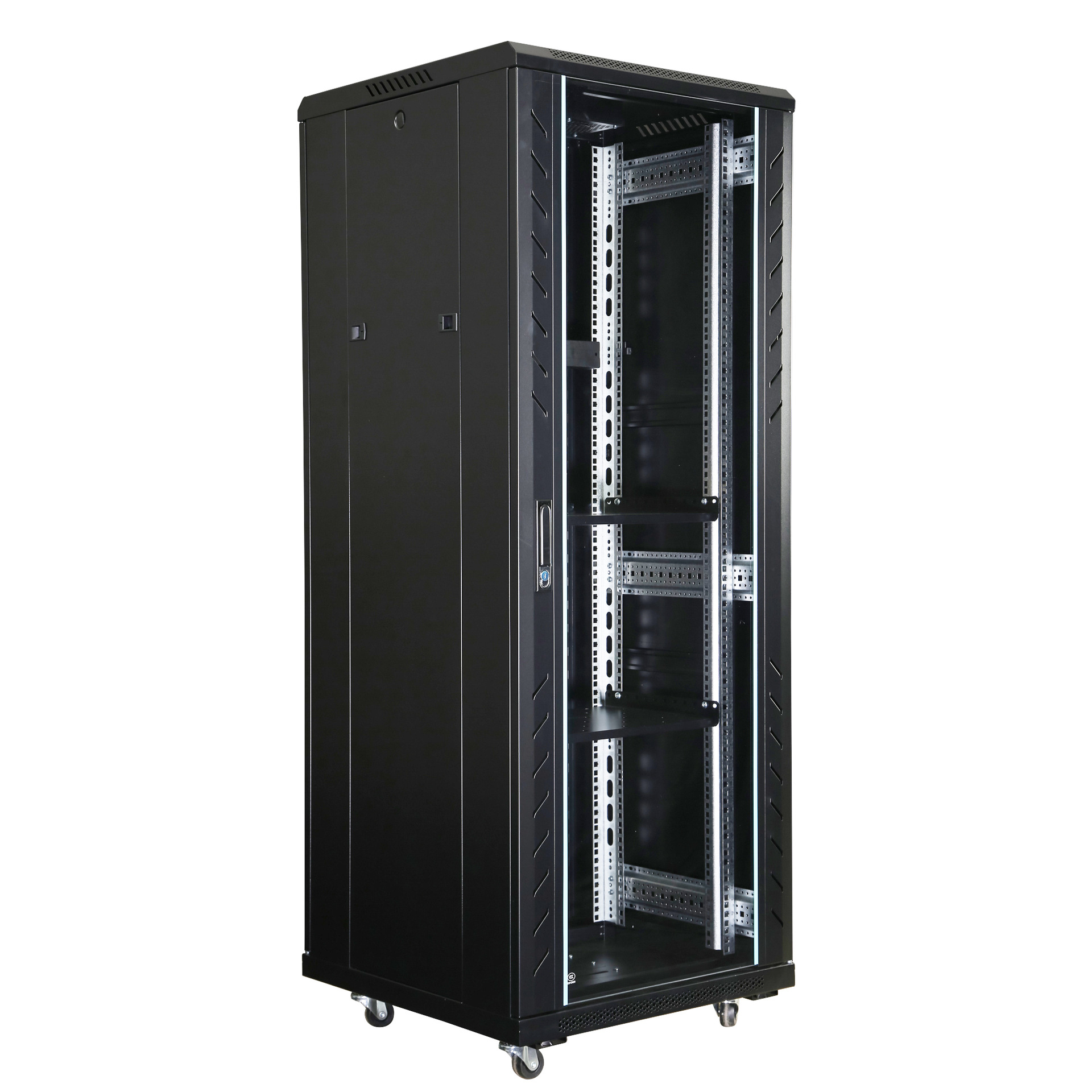
Why This Product Sells
The cabinet is the part everyone forgets until it does not fit. A high-density AI rack is no longer a passive metal box. It has to carry a much heavier payload, accept a specific mounting convention, leave room for dense cabling and liquid-cooling manifolds, move air through the right openings, meet grounding expectations, and survive a loading dock, an elevator and a container. Public reference designs now describe payloads and dimensions far beyond conventional enterprise racks, which turns the enclosure into an engineered build item.
That is why this page belongs in the same cluster as our custom metal parts range. A rack cabinet is a sheet-metal and machining product: bending, welding, punching, surface finishing, hardware and assembly. The same workshops, the same drawing discipline, the same first-article logic and the same inspection vocabulary apply. We are not pretending to be a rack brand; we are a sourcing and freight partner that can take your drawing to a vetted factory and get the result to your site in one piece.
Freight is genuinely part of the specification here. Cabinets are voluminous relative to their value, so volumetric weight, knockdown versus assembled shipping, pallet design and container loading can dominate the landed cost. A cheap cabinet that ships badly or arrives with a twisted frame is more expensive than a dearer one that arrives square. Our landed-cost breakdown is where those assumptions get made visible.
Buyers are system integrators, modular data-centre builders, regional distributors and fit-out contractors working to a site survey. They usually have a drawing and a delivery address. What they need from us is a controlled revision, honest structural evidence, packaging designed for the actual route, and one party accountable when the cabinet, the power gear and the cooling parts all arrive from different factories.
Key Specifications
| Item | What we confirm with you |
|---|---|
| Mounting convention | The rack standard, internal width, mounting hole pattern and vertical pitch your equipment expects. |
| Dimensions and capacity | Height, width, depth and usable mounting space, including door swing and service clearance. |
| Structural load | Static and dynamic load expectations, anchoring, levelling and any seismic or site-specific requirement. |
| Thermal and routing | Door perforation, airflow path, cable entry, and provision for manifolds, busbars or liquid lines. |
| Material and finish | Sheet grade, thickness, joining method, coating or plating, and corrosion expectations for the site. |
| Packing and delivery | Assembled or knockdown shipping, protective wrapping, pallet or crate design and the container loading plan. |
We do not publish a universal load rating, size, gauge or certificate number. Structural claims are only meaningful against a specific drawing, a specific test method and a specific installation. The approved revision is frozen in writing after first-article approval, and any change to thickness, joining method or hole pattern goes back through that approval.
What to Confirm Before Quoting
| Item | What we confirm with you |
|---|---|
| Drawing and standard | The mechanical drawing, mounting convention and any interface to power or cooling hardware. |
| Site constraints | Door widths, elevator limits, floor loading, aisle clearance and assembly conditions at the destination. |
| Load and safety | Payload expectation, anchoring method and the structural test evidence your project requires. |
| Finish and branding | Colour, coating, hardware, label artwork and any customer-specific marking, using the customer’s own artwork. |
| Ship form | Assembled, semi-knockdown or flat-pack, with the packaging and loading implications stated. |
| Quantity and delivery | First article, pilot and rollout quantities, destination port or site, and agreed delivery terms. |
A cabinet quote is not comparable until the ship form is comparable. Assembled units protect finish and save site labour but consume container volume; knockdown units pack efficiently but shift assembly work and fastener responsibility to the destination. We ask for the site survey early, because a cabinet that cannot pass the loading door is not a specification problem, it is a failed delivery.
Documents and Compliance
| Item | What we confirm with you |
|---|---|
| Drawing and revision evidence | Approved mechanical drawing, first-article inspection record, and a revision reference on every order. |
| Structural and material evidence | Material and finish records, joining-process records and the load or structural test evidence agreed for the project. |
| Packing and handling | Packing specification, protection method, pallet or crate design and any transit test records. |
| Import and shipment | Commercial invoice, packing list, origin documentation and a destination-specific classification determined by a licensed broker. |
A material mill certificate does not prove a welded frame will carry the load, and a catalogue load figure is not evidence for a custom drawing. Keep structural, material, packing and customs documents as separate groups with a common revision reference. Volumetric weight and handling rules also affect the shipping cost more than the metal price in many lanes. We are a sourcing and freight partner, not a certification body or legal counsel; the destination and structural determinations should be confirmed with the appropriate licensed professionals.
How We Source and Ship It
| Stage | What happens |
|---|---|
| 1 · Drawing and survey | We capture the mechanical drawing, mounting convention, load expectation and site constraints. |
| 2 · Workshop shortlist | Vetted sheet-metal and machining workshops are compared on forming capability, joining process and finishing. |
| 3 · First article | A first cabinet is built and inspected against the drawing before any production release. |
| 4 · Batch and inspection | Production units carry revision, material and finish records; we check squareness, finish and hardware before packing. |
| 5 · Packing and delivery | Ship form, protection and container loading are planned with the freight route, then consolidated with other rack parts where useful. |
Our factory verification confirms the workshop can actually form, weld and finish to the drawing, and our consolidation service lets cabinets, power distribution units, cold plates and cabling travel under one inspection and documentation plan. That matters here more than usual: a mixed rack shipment is exactly where a missing declaration or a crushed corner delays an entire hall.
Common Sourcing Mistakes
The first mistake is accepting a catalogue load figure as proof for a custom cabinet. Once the thickness, hole pattern, joining method or base design changes, the previous evidence no longer describes the part in front of you. Agree the test method and the drawing revision before production, and keep the first-article record with the order.
The second is treating freight as an afterthought. Cabinets are classic volumetric freight: a small change in ship form or pallet design can move the landed cost more than a factory price negotiation. Ask for the packing drawing, the container loading plan and the protective method as quoted line items, and check the site survey before the first article is approved. Applying another company’s logo or copying a recognisable frame design is a separate intellectual-property problem that no structural test can solve; we use the customer’s own artwork and the factory’s own design.
Frequently Asked Questions
Can you build cabinets to our drawing rather than a standard model?
Yes, made-to-drawing is the normal route. We work from your mechanical drawing and mounting convention, then build a first article for inspection before any production release. Changes to thickness, joining or hole pattern go back through that approval.
Do you provide load or structural evidence?
We agree the required structural test evidence with you at specification stage and collect material, joining and test records against the approved revision. A catalogue figure for a different model is not treated as evidence for a custom cabinet.
Is it cheaper to ship assembled or knockdown?
It depends on the lane, the volume and the labour available at the destination. We show both in the quotation with the volumetric weight, packing and site-assembly implications so the comparison is real rather than a headline unit price.
Can cabinets ship with power and cooling parts from other factories?
Yes. Consolidating the mixed rack bill into one documented shipment is one of the most useful things we do in this category, because it keeps inspection, packing and customs paperwork under a single accountable party.
Need a Quote? Message Us on WhatsApp
You have reached the end of the product details, so here is the direct line. Send your specification and quantity to our sourcing team and we will come back with comparable quotations, sample options and a shipping plan.
Chat on WhatsApp → Use the Quote Form
WhatsApp and phone: +86 186 7676 3055 | Email: info@cinosourcing.com
Tell us your destination market, the mechanical drawing and mounting convention, the payload expectation, the site access limits, whether you need assembled or knockdown shipping, the quantity breaks and the documents your project requires. A sketch with dimensions is enough to start.


Reviews
There are no reviews yet.