
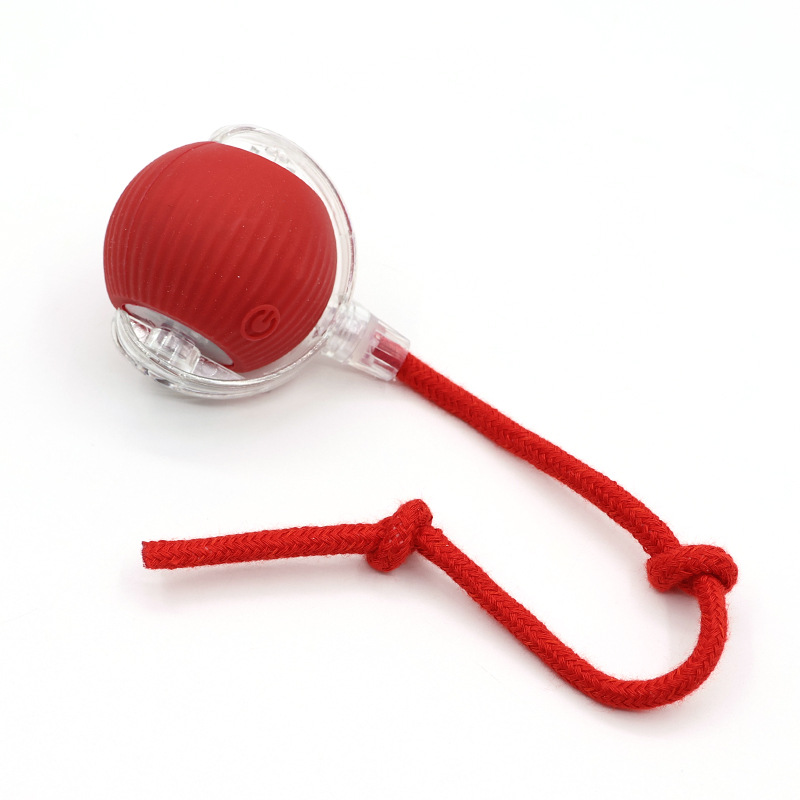
Short answer: an automatic interactive cat toy is a battery-powered teaser that moves on its own, so a cat can stalk and pounce without a person holding a wand. The format that drew attention on short-video platforms in 2026 is not the small rolling ball that has been on marketplaces for years. It is a foldable fabric play mat with a concealed motorised wand and feather that appears, disappears and changes direction beneath the cloth. That difference matters to an importer: the mat keeps the action in one place, folds flat for storage, and avoids the two complaints that dominate ball reviews, which are a toy vanishing under furniture and a motor loud enough to irritate a household.
This page is a sourcing specification, not a consumer review. It is written for pet brands, marketplace sellers, importers and buying teams who need to turn a trending format into a repeatable purchase order. CinoSourcing works on the buy side as a China procurement agent and freight forwarder. We do not manufacture these toys and we do not certify them. What we do is compare suppliers, control the specification, check samples and pre-shipment batches, assemble the paperwork a carrier or marketplace asks for, and consolidate the goods into one shipment. Our service overview explains that role in full.
1. Why the foldable hide-and-seek mat, not another rolling ball
Three form factors are usually sold under the same loose label. They do not share a supply chain, a failure mode or a freight profile, so the first decision in any enquiry is which one the buyer actually means. A rolling ball is a self-balancing plastic shell with a tail or feather attachment. A laser tower is a fixed projector with a motor and an optical module. A concealed-motion mat is a fabric assembly with a motorised arm or wand under a double-layer cover, usually with a top attachment such as a butterfly and a lower feather that pops in and out of openings.
The mat format won attention because it solved a content problem as much as a pet problem. A cat chasing something under fabric produces a short, self-contained clip; the toy stays in frame; and the mat folds away in a small flat. For an importer, the more useful consequence is that the product is a textile-plus-electronics assembly, which means the quality risks sit in seams, attachment points, the charge connector and the cell, rather than in a shell that rolls away.
| Form factor | How it moves | Most common complaint | What it means for sourcing |
|---|---|---|---|
| Rolling ball | Self-balancing, changes direction, tails whip behind | Lost under furniture, loud on hard floors, tail bracket snaps | Very crowded supply, price-led comparison, high replacement-part demand |
| Laser tower | Projects moving patterns on floor or wall | Some cats never complete the chase; optical module adds a compliance layer | Additional laser-product documentation and destination checks before booking |
| Foldable concealed-motion mat | Wand and feather move unpredictably under fabric | Feather heads wear out, fabric lifts, charge port or cycle behaviour varies by batch | Textile and electronics both need specification; spare parts can be a second SKU |
2. What buyers actually type into Google, and who owns those results
The search landscape for this category splits cleanly, and pretending otherwise is how product pages end up with impressions and no enquiries. The consumer layer is phrases such as best interactive cat toys, best automatic cat toy for indoor cats, and hide and seek cat toy reviews. Those results belong to review publishers, affiliate roundups and large marketplaces. They are written for a person buying one toy for one cat. A supplier page cannot outrank them and should not try.
The wholesale layer is electric cat toy supplier, interactive cat toy wholesale and OEM automatic cat teaser. Those results belong to factory sites and B2B marketplaces with thousands of live listings. Competing there on catalogue volume is not realistic for a sourcing agent, and we do not present ourselves as a factory to do it.
The layer that is thin is the execution layer: what to specify on a hide-and-seek mat, which spare parts to bundle, what a pre-shipment inspection should check on a rechargeable toy, which battery documents a forwarder needs, and how a trend-window order is split between air, express and direct-to-customer parcels. Those are the questions a brand or importer asks in a complete sentence, and they are also the questions AI answer engines tend to resolve from explanatory pages rather than product catalogues. The rest of this page is structured to answer them directly, section by section. If you are mapping the wider category first, our pet supplies sourcing guide covers the category map; this page goes down into one SKU.
3. The specification sheet to send a supplier
A photograph and a product name are not a specification. Two factories can quote the same phrase and deliver completely different assemblies, and the difference only appears after the goods arrive. The following items should be written into the enquiry and confirmed on a sample before any batch is approved. None of them are performance promises from us; they are the variables you need to freeze.
- Mat and cover. Fabric type and weight, double-layer construction, seam type around the wand channel, edge finishing, whether the cover is removable for cleaning, folded dimensions, and whether a non-slip base or suction points are included for hard floors.
- Motion and modes. Number of play modes, how the movement pattern changes between them, auto-stop and standby behaviour, touch or motion reactivation, and whether sound can be switched off. Ask for a short video of the sample running on the actual fabric, not a rendered clip.
- Teaser heads and spares. Number and type of attachments, how each one clips or screws on, and whether spare feathers or tails are quoted as a separate line. This is the part that wears out first and the easiest second SKU to add.
- Power and charging. Cell chemistry, rated capacity and watt-hour figure, charging port type, charging circuit protection, and where the port sits. A port hidden under a cap is fine; a port that requires pulling the attachment off to charge is a known breakage point.
- Noise and surface behaviour. How the motor sounds on hard flooring versus carpet, and whether the unit stays in place during a full cycle. Ask for the sample to be run on the floor type your customers actually have.
- Retail presentation. Box dimensions, insert or tray, instruction language, warning wording, barcode placement, and whether private-label artwork is applied to the box or the product itself. Our custom packaging service and private-label notes cover the options.
4. What breaks first: turning review complaints into purchase-order clauses
This is the section most supplier pages skip, and it is the one that protects your rating. Public reviews of motorised cat toys repeat the same small set of failures with remarkable consistency: short or inconsistent runtime, a feather or tail that snaps at its clip, a brittle bracket around the charging port, a motor that becomes audible on hard floors, a unit that stops holding a charge after a few weeks, and a cat that loses interest because the movement pattern never changes. None of these are exotic engineering problems. They are unspecified variables.
| Failure reported by end users | Clause to write into the order | Check on the sample and on the batch |
|---|---|---|
| Runtime far shorter than expected, or a unit that will not hold a charge | Cell model, capacity and supplier frozen in writing; charge-cycle test result required for that exact cell | Run repeated full cycles; compare the cell marking against the quoted model |
| Feather, tail or butterfly snaps at the joint within days | Attachment method and pull-test acceptance defined; spare heads quoted separately | Repeated attach and detach cycles; inspect the clip moulding for flash and thinning |
| Charging bracket cracks when the unit is opened | Port location fixed so charging does not require removing the loaded attachment | Cycle the port cover and cable insertion; check the hinge after repeated use |
| Motor noise on hard flooring, or the mat slides during play | Noise expectation and non-slip treatment agreed against a named floor type | Run a full cycle on hard floor and low-pile carpet; record position drift |
| Fabric lifts, seams open, or the wand snags | Seam specification and wand-channel clearance written into the tech pack | Inspect seam density and channel edges; watch for catching across multiple cycles |
| Cat loses interest after a week or two | At least two genuinely different movement patterns and replaceable heads in the box | Compare mode recordings; confirm spare-head packaging and instruction wording |
The commercial point is simple: a slightly better specified unit costs less than a wave of one-star reviews and a marketplace listing suppression. Our pre-shipment inspection service turns this table into a checking plan, and factory verification establishes who is actually assembling the goods before money moves.
5. Sampling: what to test before you approve a batch
Approve a sample against a written plan, not against a first impression. A sample that runs beautifully for five minutes on an office desk tells you very little about a carton of units after a month in a customer’s living room. Ask for production-representative samples rather than hand-built showroom pieces, and keep the approved unit sealed as the reference for later inspection.
At minimum, run the unit through repeated full play and charge cycles, test every mode and the standby reactivation, attach and detach each teaser head repeatedly, fold and unfold the mat, clean the cover as the instructions describe, and play it on both a hard floor and a low-pile carpet. Record the results as short clips with the sample identifier visible. Those clips become the reference your inspector uses later, and they are also useful to your own listing team. If you plan several colourways or a second attachment set, approve each variant separately; fabric and moulding changes between variants are a common source of quality drift.
6. Battery and transport: the document file a forwarder will ask for
This product contains a rechargeable lithium cell, so the transport file is not optional and it is separate from product safety paperwork. A forwarder or carrier will normally ask for a UN38.3 test summary for the exact production cell, a safety data sheet, the cell and pack specification including the watt-hour rating, correct packaging and labelling, and the applicable dangerous-goods declaration for the route. Cells installed inside equipment travel under a different classification from cells shipped on their own, and air and sea routes follow different rule sets. Which of these applies to your booking is something your freight partner confirms for the actual routing, not something a product page can promise.
Two further points save the most time. First, the cell model must be frozen before any product testing begins, because changing the cell after a report is issued can invalidate the file and force a retest. Ask the supplier directly when the cell is locked and what happens to the documents if the cell source changes. Second, a pet toy is not automatically a children’s toy in most markets, but a product with a rechargeable cell, small detachable parts, a button cell or a laser module may still trigger electrical-safety, battery, laser, chemical or labelling requirements depending on the destination country and the sales channel. Confirm the applicable set with a qualified testing body or your compliance adviser before the order is placed. We coordinate document collection and version matching as part of the shipment; we do not issue certificates or give legal advice. Our lithium battery shipping documents guide sets out the file we normally assemble.
7. Packaging, private label and the unboxing clip
For a product discovered through short video, the box is part of the advertisement. It also has to survive a parcel network. Specify the insert so the mat cannot be creased in transit, keep the folded shape visible through the packaging where possible, include the spare teaser heads where the listing promises them, and make sure the instruction sheet and any warnings appear in the language of the destination market. If you are building a brand rather than reselling a generic box, agree artwork, colour references and barcode placement before the packaging order is placed, because reprinting retail boxes is a slow and avoidable expense.
Consider quoting spare feather or tail sets as a separate line from the start. It gives your customer a reason to return, it reduces the pressure to make the original attachment indestructible, and it turns the most common failure into a repeat purchase. If the goods go to a marketplace fulfilment centre, our FBA prep service can handle labelling, bundling and carton requirements before dispatch.
8. Pre-shipment inspection for a mixed pet-products carton
Once a specification is agreed, the risk shifts from design to batch consistency. Define the sampling plan and the acceptance criteria in the purchase order rather than after a dispute: which functions are checked on every sampled unit, which cosmetic limits apply to fabric and moulding, what counts as a critical defect for a battery product, and what happens if the cell marking does not match the approved sample. A sealed, signed reference sample should stay with the inspection file.
Trend orders are often assembled with other pet lines to fill a carton. That is sensible for freight, but it changes the inspection job: different suppliers, different packaging standards and different document sets in one shipment. Consolidate only after each line has passed its own check, and keep the compliance file indexed by SKU so a customs or marketplace request can be answered without reopening every carton. Our sourcing process guide explains how we sequence supplier checks, consolidation and dispatch.
9. Freight and fulfilment inside a short trend window
A trend-driven product punishes slow decisions. Ocean freight is usually committed well before a trend is visible; air and express capacity is priced and allocated at the time of booking; and a battery-containing product narrows the set of carriers willing to take it. The practical answer is not a universal transit promise but a channel plan: a small first batch by a faster route to test the listing, a larger replenishment by a slower route if the sell-through holds, and a China stock pool for direct-to-customer parcels where the sales channel supports it. Our dropshipping service covers that last model, and our freight forwarding overview explains the routing choices.
Responsibility at the destination has to be settled before dispatch, not at the port. Agree who acts as importer of record, which party files the entry, and whether the shipment moves on a delivered-duty-paid basis or under terms where the buyer clears it. Our notes on DDP shipping, importer of record and US customs entry set out the questions to answer for the two markets that generate most enquiries. Duty rates, classification and current filing rules belong in that conversation with a licensed broker, not on a product page.
10. How we work on the buy side
Tell us the format you want to match, your destination market, the quantity breaks you are considering, the packaging and document requirements of your channel, and whether you need samples before a batch. We compare suppliers against the same written specification, verify who is assembling the goods, coordinate sample approval, build the compliance file, arrange inspection and consolidate the shipment to your chosen route. We are not a factory, we do not hold a catalogue of pre-approved products, and we will not quote a price, a minimum or a delivery date before the specification is defined. Start from the sourcing categories if you are combining several lines, or send the enquiry through our contact page.
11. Frequently Asked Questions
Is an automatic interactive cat toy the same thing as an automatic laser toy?
No. A laser unit projects a moving light and adds an optical module with its own documentation questions. The mat described here uses a physical wand and feather under fabric. They are different assemblies, different supplier bases and different compliance conversations, so please name the format in your enquiry rather than just the category.
Can a rechargeable cat toy ship by air from China?
Usually yes when the cell is installed in the equipment, but it is a regulated battery shipment. Carriers and forwarders typically require a UN38.3 test summary for the production cell, a safety data sheet, correct packaging and labelling, and the declarations applicable to the route. Capacity, the number of units per carton and the airline’s current rules all affect the booking, so confirm the routing with your freight partner before you commit to a launch date.
Do pet toys need the same certificates as children’s toys?
Not automatically. A product made for an animal is generally not treated as a children’s toy, but a rechargeable cell, detachable small parts, a button cell or a laser module can still bring electrical-safety, battery, laser, chemical or labelling rules into scope, and marketplaces sometimes apply their own evidence requirements. The applicable set depends on the destination country and the sales channel. Confirm it with a qualified testing body or your compliance adviser before placing the order; we assemble and version-match the documents but do not certify products or advise on law.
What should I ask a factory before a first order?
Freeze the mat fabric and seam construction, the movement modes, the attachment and spare-head design, the cell model and charging port, the noise expectation, and the retail packaging. Then ask when the cell is locked, what happens to the test file if the cell source changes, and whether the sample is production-representative. The specification sheet in section three and the failure table in section four are a ready-made enquiry checklist.
Can I start small and restock only if the trend holds?
That is the sensible structure for a trend product, and it is how we normally plan them: a first batch by a faster route to validate the listing, then a replenishment decision based on actual sell-through. What is realistic depends on the factory, the variant count and whether artwork is involved, so send your quantity breaks and we will tell you which suppliers can genuinely support a small first run rather than quoting a generic minimum.
How do I keep this from being a one-week novelty for customers?
Specify more than one genuinely different movement pattern, include replaceable teaser heads, and quote spare-head sets as a separate line. From the supply side this is cheaper than engineering an indestructible attachment, and from the retail side it gives the buyer a reason to come back. Packaging that explains rotation and mode switching also helps set expectations before the first review is written.
Need a Quote? Message Us on WhatsApp
You have reached the end of the specification, so here is the direct line to the team that will build your quote. Send us the format you want to match, your destination market, the quantity breaks, the packaging and the documents your channel expects, and we will come back with comparable supplier offers, sample options and a freight plan.
Chat on WhatsApp → Use the Quote Form
WhatsApp and phone: +86 186 7676 3055 | Email: info@cinosourcing.com
It helps to name the mat size and fabric, the number and type of teaser heads, whether spare feathers go in the box, the charging port, the sound and mode options, your retail box or private-label artwork, the destination country, and which battery and product documents your marketplace or forwarder requires. A photo, a supplier link or a screenshot of the current listing is plenty to begin. No obligation, and no long form.

Reviews
There are no reviews yet.