
Why This Product Sells
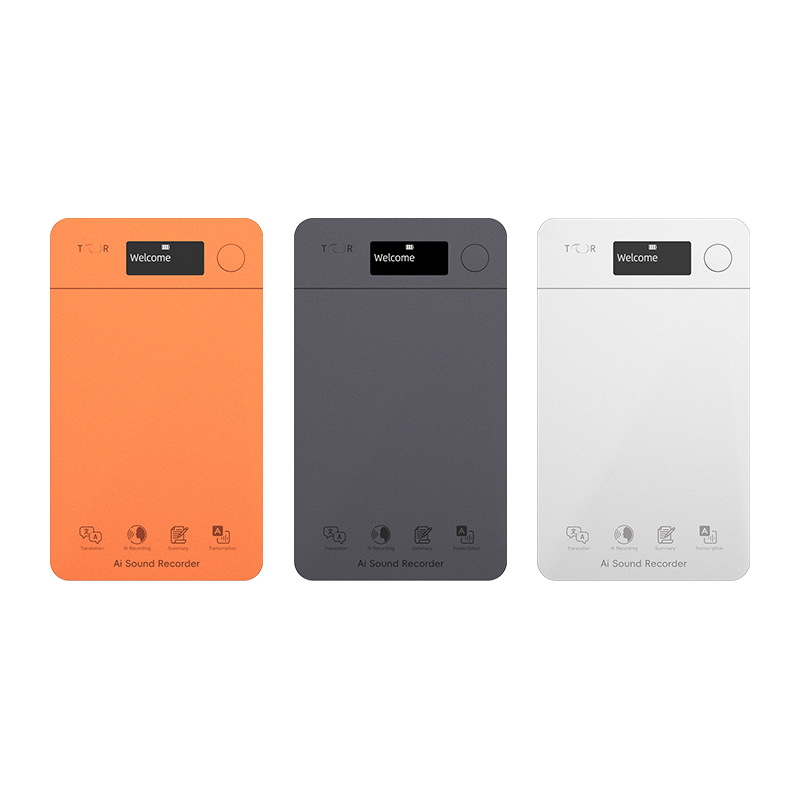
An AI voice recorder is not a voice recorder with a label on it. It is a small capture device, a mobile application, a user account system and a cloud transcription service sold as one product. Buyers who treat it as a piece of hardware usually discover the real cost and the real risk only after the first shipment arrives. That distinction is the reason this category is worth sourcing carefully, and the reason most supplier pages describe it badly.
Search demand in the wider AI category is enormous and almost entirely unusable for a product page. Most of it belongs to software assistants, video models, coding tools, data-centre infrastructure, a handful of branded smart glasses and news events. A second slice is pure labelling noise: consumer appliances that gained the letters AI in front of an unchanged product name produced spectacular short-term search spikes without a changed product behind them. Those queries cannot be turned into a shippable SKU, and a page built for them attracts readers who will never send an enquiry.
The pocket recording category is different because a real object exists and a real buying audience pays for it. Two US consumer brands now attract the large majority of recorded search demand for this product family, while the generic category phrases are comparatively small and flat. That is a warning and an opportunity at the same time. It means you should not expect a high-traffic generic term to carry this page. It also means the brands have already done the expensive work of explaining the use case: a meeting, an interview, a lecture or a phone call becomes searchable text, a summary and a list of action items. Distributors, marketplace sellers, corporate gift buyers and software companies that want their own branded device are now looking for a supply route that is not tied to somebody else’s retail brand.
We wrote this page for that buyer. It is deliberately not a review and not a technical explainer. It is a sourcing brief for someone who needs to compare factories, decide who owns the application and the transcription service, settle what happens to recorded audio, and get a mixed electronics shipment through customs. Those are the questions that determine whether a private-label programme survives its second year.
Two commercial angles sit inside one sourcing project. The device is a durable hardware SKU with a longer replacement cycle. Transcription allowances, templates, language packs and storage plans are recurring. A seller who understands both can price the hardware honestly and still build a defensible margin; a seller who quotes only the unit price will be undercut by someone who moved the cost into a service plan.
Timing is worth stating plainly. Retail interest in productivity gadgets concentrates in the last quarter and in the back-to-school period, while importers and private-label teams lock in platforms, packaging and documentation well ahead of those windows. A page published now is meeting the next buying cycle, not this week’s retail orders, which is why we do not put a year in the title.
Key Specifications
Start by fixing the format, because it changes the tooling, the acoustic design, the accessories and the price. A card-style magnetic recorder that attaches to a phone, a clip or badge worn on clothing, a lanyard pendant, and a thicker recorder with a display are four different products. Suppliers use overlapping names for all of them. If the format is not written into the enquiry, three quotes will describe three different objects and none can be compared. Decide the format before samples are made, not after.
Then separate the hardware from everything that happens after a recording. The most useful early document in an OEM project is a responsibility matrix with one owner and one acceptance method for every layer. We use the one below when we compare suppliers.
| Layer | What must be specified | Evidence to request before approval |
|---|---|---|
| Device hardware | Microphone array, battery, storage, enclosure, charging connector, buttons, magnetic parts | Versioned specification, approved sample, drawings, inspection points |
| Firmware and local files | Recording format, file naming, transfer path, call-capture mode, update method | Demonstrated source files, transfer workflow, update policy |
| Application and accounts | Who publishes, brands, maintains and supports the app and user accounts | Current build, scope document, account map, support responsibilities |
| Transcription service | Functions, languages, usage allowance, model provider, server region, recurring fees | Service dossier and a dated commercial schedule |
| Data governance | Where audio and transcripts are stored, retained, exported and deleted | Data-flow diagram, policy documents, a live deletion test |
| Commercial delivery | Quantity breaks, packaging scope, warranty route, change control | Signed quotation, approved sample, production plan |
Phrases such as “app supported” and “AI included” are not specifications. The first does not say who owns the store account or pays for maintenance. The second does not say which languages are covered, how usage is measured, or what happens when the service changes. Convert every such phrase into a line in the matrix with an owner and an acceptance test.
We do not print storage capacities, battery hours, microphone counts, language totals or template numbers on this page. Those belong to a specific platform revision and a specific commercial configuration, and they change between sample and mass production. Ask for a versioned specification sheet and test the sample in the room where it will actually be used. Conference-room acoustics, speaker distance, regional accents and industry vocabulary affect transcription quality in ways a spec sheet cannot predict. Test the whole chain: record, transfer, transcribe, summarise, export and delete.
Treat a logo request as a manufacturing decision rather than a cosmetic one. Artwork and packaging are usually straightforward. Changes to microphone openings, magnetic parts, battery layout, enclosure geometry or sealing can affect tooling, acoustic behaviour, yield and certification, and each deserves its own feasibility review and validation step.
MOQ and Lead Time
There is no honest universal number for this product, so we do not print one. Minimum quantity and lead time depend on the route you choose, and comparing routes by unit price alone is the most common mistake in this category.
| Route | What you actually get | What you take responsibility for |
|---|---|---|
| Finished retail product, resold | Existing device, existing brand, existing app and service plan | Channel rights, inventory, warranty routing, after-sales terms; little engineering control |
| Private label on an existing platform | Your logo, packaging, manual, storage mix and selected software configuration | Approvals, documentation, service continuity, launch support, change control |
| Full ODM programme | New industrial design, tooling, PCB and firmware integration | Tooling cost, certification programme, longer validation, lifecycle ownership |
Ask every supplier to classify each of your requests into one of those routes, and to quote them separately. Then require the quotation to be itemised. A single all-in unit price hides the parts that will grow later.
| Line on the quotation | Why it must be separate |
|---|---|
| Device unit price at each quantity break | Makes three suppliers genuinely comparable |
| Logo, artwork, packaging and manual | Different minimum quantities and lead times from the device |
| Application branding, SDK or API work | Often a separate engineering commitment, not a printing cost |
| Transcription allowance and renewal terms | The real total cost of ownership sits here |
| Certification and testing for the target market | Model-specific; a factory certificate may not cover your configuration |
| Sample, inspection and rework | Defines who pays when a batch misses the approved sample |
| Freight, duties and destination delivery | Separates the factory quote from the landed cost |
Pay particular attention to the service line. A first year of included transcription is a marketing offer, not a product specification. Ask what the allowance is measured in, what it costs when it renews, whether it is per device or per account, which model provider sits behind it, what happens if that provider changes pricing or withdraws, and whether the device keeps its basic recording and export functions without an active plan. A buyer who cannot answer those questions cannot price the product to their own customer.
Also put continuity in writing. If the app is discontinued, who maintains the store listing, who owns the user accounts, can recordings be exported in a standard format, and can audio be deleted from the device, the app and the cloud at the same time. We verify the factory and the paperwork before a deposit moves, and we recommend the same discipline for the software side of the project.
Shipping and Delivery
This is a connected device with a rechargeable lithium battery and a wireless radio, so it travels under different rules from a plain accessory. Battery test documentation, packaging for lithium cells, and the choice between air and sea affect both timing and cost. A supplier may quote an attractive unit price and still be unable to hand over a complete, version-matched document set for the model being shipped.
There is a second compliance layer that electronics suppliers routinely conflate with the first. Electromagnetic and radio conformity covers the device as a piece of hardware. It says nothing about what happens to a recorded conversation after it leaves the device. Data protection, retention, consent and security are governed by a different set of rules, and they attach to the service and to the way your customer deploys the product rather than to the circuit board. A factory can hold perfectly valid product certificates and still be unable to support a customer in a regulated profession.
| Document set | Who normally issues it | What to check |
|---|---|---|
| Radio and electrical conformity | Accredited test laboratory, declared by the manufacturer | Exact model, firmware version, voltage, plug and radio module; not a neighbouring product |
| Battery transport documentation | Cell or pack manufacturer, consolidated by the factory | Matches the pack actually installed; accepted by the chosen carrier and route |
| Service and privacy documentation | App or platform owner, sometimes a different company | Server region, retention period, deletion route, subprocessor list, export rights |
| Import classification and entry papers | Licensed customs broker in the destination country | Classification decided from the real product, not copied from a supplier template |
Recording consent is a market question, not a hardware feature. Some jurisdictions permit recording with one party’s knowledge while others require all participants to agree, and cross-border calls can be governed by the stricter rule. In Europe, voice recordings are personal data, and voiceprints used for speaker identification may fall under biometric rules. If your customers sell into healthcare, legal, education or government, ask early whether the platform can support the required agreements, retention limits and deletion evidence. We are a sourcing and freight partner, not a certification body or legal counsel; the destination-market determination should be confirmed by a licensed broker or a qualified local adviser.
On classification, do not accept a code copied from an unrelated recorder listing. Whether a unit is treated as a sound recording apparatus, a data-processing device or another category depends on its actual construction and function, and replacement parts and accessories may follow separate paths. Our landed cost guide explains why classification belongs in the quotation rather than in a product description.
Operationally this is where a sourcing partner earns its keep. Devices, magnetic accessories, cables, printed manuals and retail cartons often come from several workshops. We consolidate them in Shenzhen, check the packing list against the approved sample, run pre-shipment inspection, and ship under one customs entry with duty-paid door-to-door delivery where required. For marketplace sellers we can also route single units directly, and align the retail packaging with the channel before production starts.
Get a Factory Quote
Send us the destination market, the format you want, the microphone and storage configuration from the platform sheet, whether the device must capture phone calls, which application and cloud service should own the data, the languages and transcription allowance your customers expect, the plug, the manual language, the packaging scope, the documents your sales channel requires, and the quantity breaks you want priced. A photograph or a link to a reference product is enough to start.
We will come back with comparable quotations from vetted workshops, sample arrangements, a document check, an inspection plan and a consolidated door-to-door freight option. Our role is to make the interfaces between factories, software and shipping accountable to one party, so that a problem in one layer does not become your problem eight thousand kilometres away. Here is how our sourcing process works if you have not used an independent agent before.
Get a quote or message us on WhatsApp with the product you have in mind.
Frequently Asked Questions
Is an AI voice recorder just a digital voice recorder?
No. A conventional recorder stores audio. This product also depends on an application, user accounts and a transcription or summarisation service. When you compare quotations you are comparing a whole system, and the hardware price is only one line of it.
Do CE, FCC or RoHS certificates cover transcription and data privacy?
No. Those documents address the device as hardware. Voice data handling is governed separately by data protection rules, contractual agreements and the way the service is configured. Ask for the service and privacy documentation as its own package.
Who owns the app, the user accounts and the transcription service?
It depends on the route. With a finished retail product the brand owner controls them. With a private-label or ODM programme they can sit with you, with the factory or with a third-party platform. Put the owner in writing before approving a sample, along with renewal terms and an export and deletion route.
Can the device be used to record calls in every market?
Recording rules differ between jurisdictions, and some require the agreement of all participants. This is a question for your customer’s market and use case, and for a qualified local adviser. We help you collect the product and service documentation that adviser will ask to see.
What should I send to get comparable quotes?
Destination market, device format, target configuration, app and cloud ownership, languages and service allowance, packaging and artwork scope, required documents, and the quantity breaks to price. If any of those are undecided, tell us which ones and we will price the routes separately.
Need a Quote? Message Us on WhatsApp
You have reached the end of the product details, so here is the direct line. Send your enquiry to our sourcing team and we will come back with comparable factory quotations, sample options, a document check and a freight plan.
Chat on WhatsApp → Use the Quote Form
WhatsApp and phone: +86 186 7676 3055 | Email: info@cinosourcing.com
Tell us your destination market, the model or version you want, quantity breaks, packaging scope and the documents your sales channel requires. A photograph or a link to a reference product is enough to start. No obligation, and no need to fill in a long form.


Reviews
There are no reviews yet.